Your hallway is the first space you see when you come home and the first impression visitors get of your home. Yet it is often treated as little more than a route between rooms, with shoes, coats and everyday clutter quickly taking over.
These hallway decor ideas are designed to help you create an entrance that feels stylish, practical and personal without making it difficult to move through. Whether you have a narrow Victorian corridor, a compact new-build entrance or a larger hallway with plenty of empty wall space, the right combination of colour, lighting, storage and decorative details can completely change how the area feels.
Below, you will find 18 practical ideas that are realistic for British and Irish homes, including options for small spaces, renters and tighter budgets.
The only woodworking guide built for small spaces and complete beginners. Master 3 real projects using just 5 affordable hand tools even if you live in a studio apartment.


Quick Guide: Start With the Problem You Want to Solve
| If your hallway feels… | Start with… |
|---|---|
| Dark | A mirror and improved lighting |
| Cluttered | Closed storage and fewer visible items |
| Empty | Artwork, a console or a feature wall |
| Narrow | Wall-mounted décor and slim furniture |
| Plain | Paint, wallpaper or architectural detail |
| Unwelcoming | A runner, warm lighting and natural textures |
1. Create a Welcoming Console Table Display
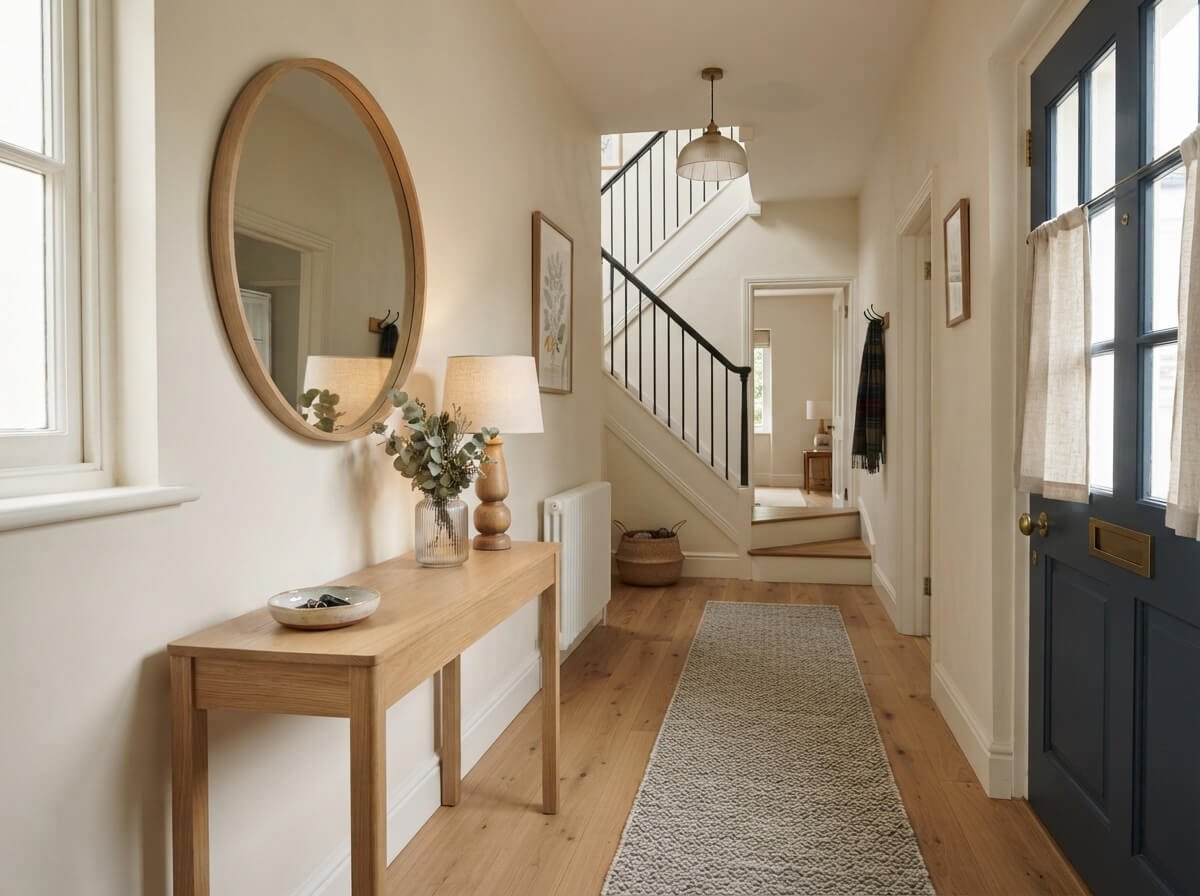
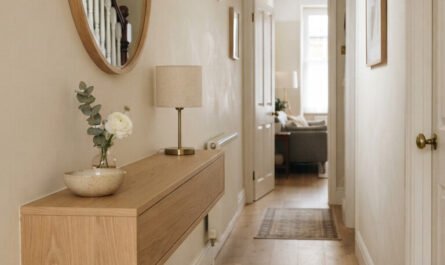
A console table is one of the easiest ways to make a hallway feel intentionally decorated rather than simply functional.
Choose a size that suits the available width. In a compact hallway, a slim console or wall-mounted shelf is usually more practical than a deep table.
Style the surface with a small lamp, a dish for keys and one or two decorative pieces.
Why it works
It creates a visual focal point near the entrance while giving everyday items a designated place.
How to recreate it
Start with the largest item, usually a mirror or artwork above the console. Then add one light source and a small practical object.
Practical styling tip
Avoid filling every centimetre of the surface. A little empty space makes the arrangement look more considered.
Budget-friendly alternative
Use a simple floating shelf instead of a full console table.
2. Use a Large Mirror to Add Light and Depth
Mirrors are a practical and decorative choice, particularly in hallways with limited natural light.
A large round mirror can soften a space with lots of straight lines, while a tall rectangular mirror suits a long corridor.
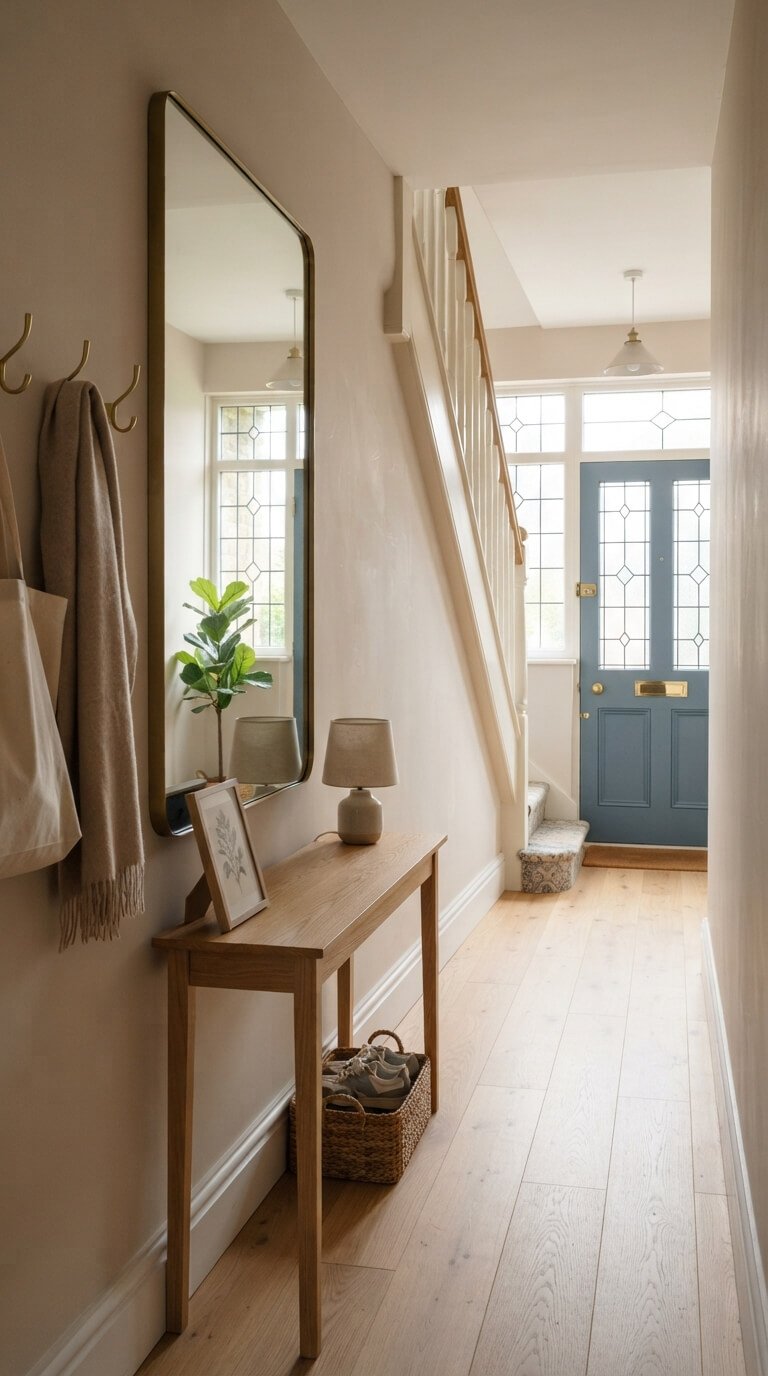
Place it where it reflects daylight, an attractive room or a visually calm part of the home.
Why it works
A mirror can help distribute available light and create a greater sense of visual depth.
How to recreate it
Choose one generously sized mirror rather than several small mirrors competing for attention.
Practical styling tip
Check what the mirror reflects before hanging it. Reflecting coats and clutter can make the hallway feel busier.
Budget-friendly alternative
Update an inexpensive mirror with a painted frame that matches your colour scheme.
3. Add a Hallway Runner for Colour and Warmth
A runner can make an ordinary hallway feel finished while adding softness underfoot.
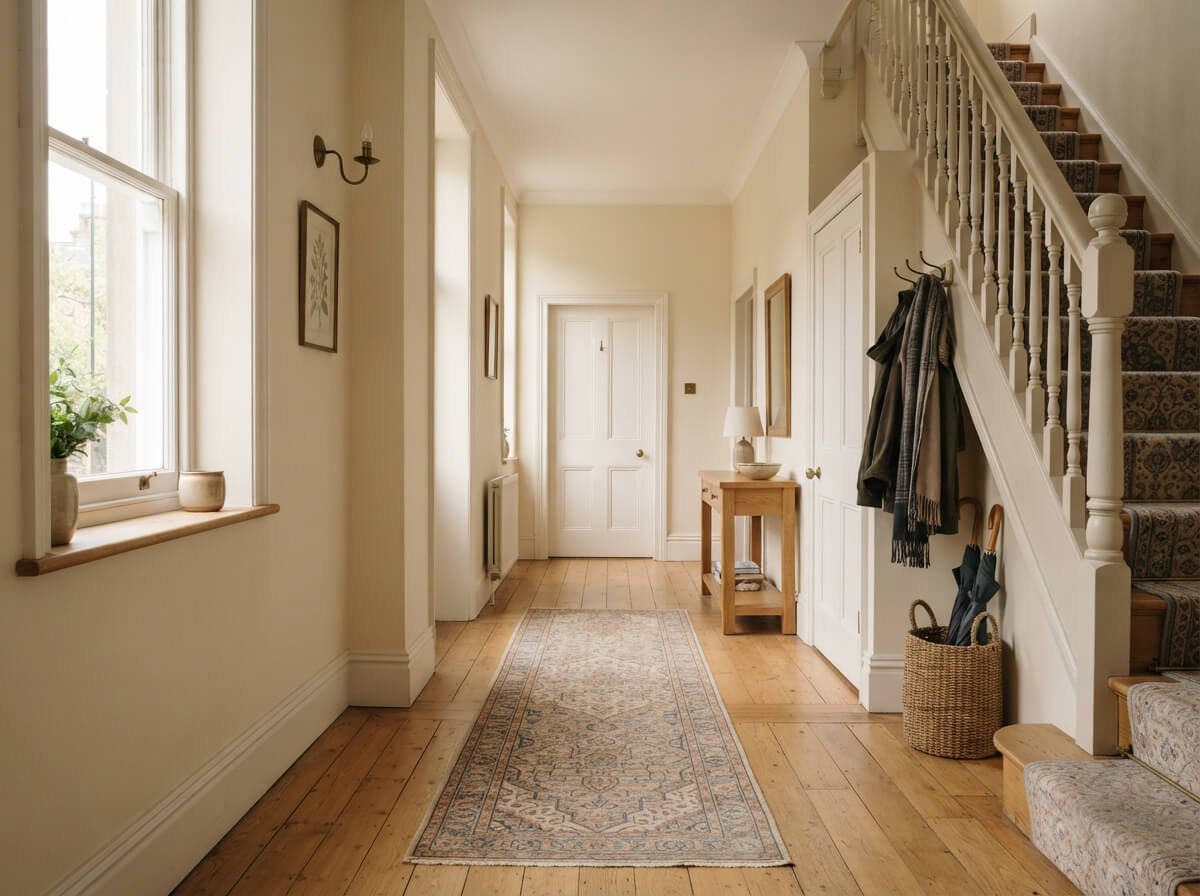
For busy entrances, choose a durable low-pile or washable design. In a narrow hallway, leave a visible border of flooring around the rug.
The only woodworking guide built for small spaces and complete beginners. Master 3 real projects using just 5 affordable hand tools even if you live in a studio apartment.
Patterned runners can add personality to a neutral entrance, while a plain woven runner works well in a calmer, minimalist scheme.
Why it works
It visually connects the length of the hallway and introduces colour or texture without adding furniture.
How to recreate it
Measure carefully, including door clearances, before buying.
Practical styling tip
If your walls and furniture are already colourful, choose a simpler runner. If the hallway is plain, let the runner provide the pattern.
Budget-friendly alternative
A simple flatweave or washable runner can deliver the same decorative effect at a lower cost.
4. Turn One Wall Into a Gallery
A gallery wall can bring personality to an otherwise blank hallway.
Instead of hanging unrelated pieces at random, choose a loose theme. Family photographs, botanical prints, vintage artwork or black-and-white photography can all work well.
Matching frames create a more polished look, while mixed frames suit a relaxed, collected style.
Why it works
It uses vertical wall space without taking up valuable floor area.
How to recreate it
Lay the arrangement on the floor first and photograph it before hanging.
Practical styling tip
Keep consistent spacing between frames, even if the artwork itself varies.
Budget-friendly alternative
Print personal photographs or downloadable artwork and use affordable matching frames.
5. Add a Feature Wall With Paint or Wallpaper
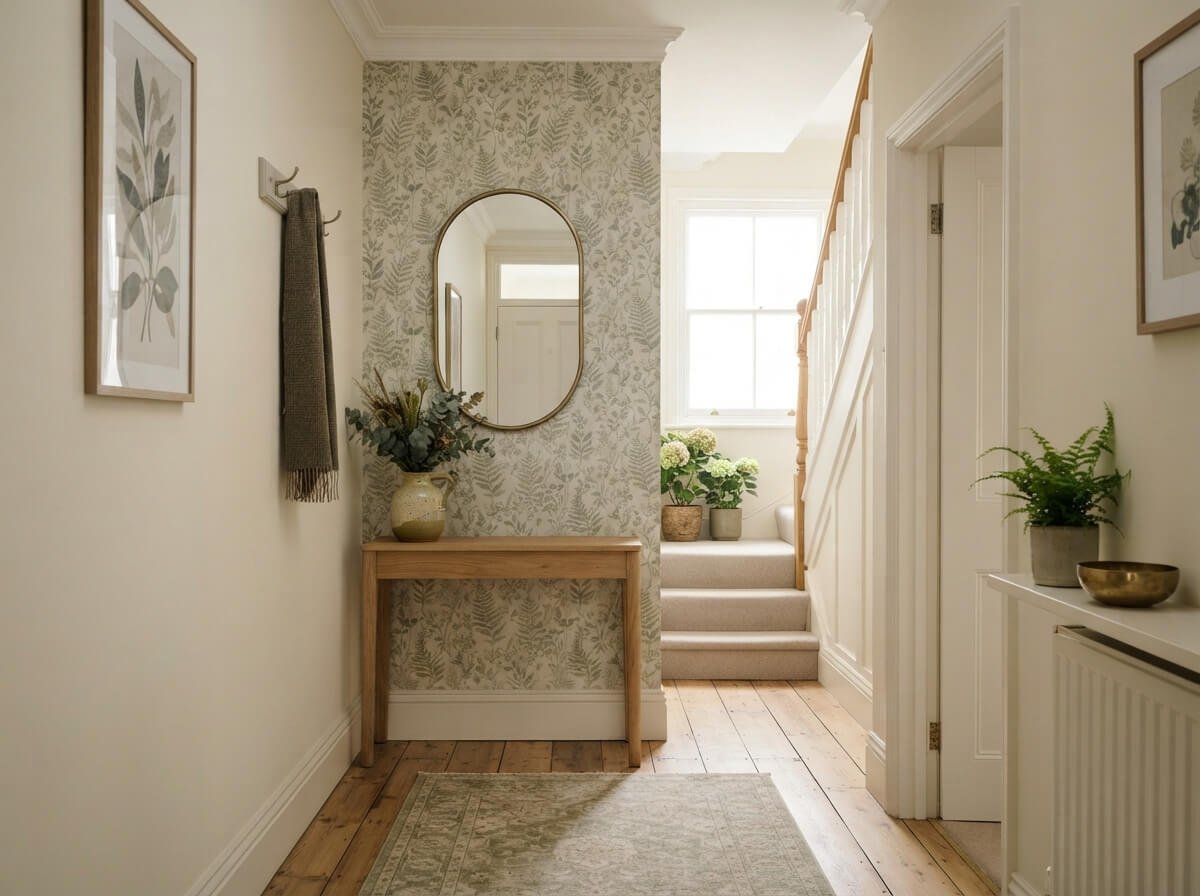
A hallway is a good place to experiment with colour because it is often a smaller area than a living room or bedroom.
You could paint the end wall in a deeper shade, use patterned wallpaper in the entrance area or add subtle panelling.
Why it works
A feature wall gives the hallway a clear decorative identity without requiring lots of furniture or accessories.
How to recreate it
Choose one area to highlight rather than using several competing finishes.
Practical styling tip
If you use bold wallpaper, keep surrounding accessories relatively simple.
Budget-friendly alternative
Paint can create a strong transformation without the cost of wallpapering the entire space.
6. Add a Slim Bench for Style and Everyday Use
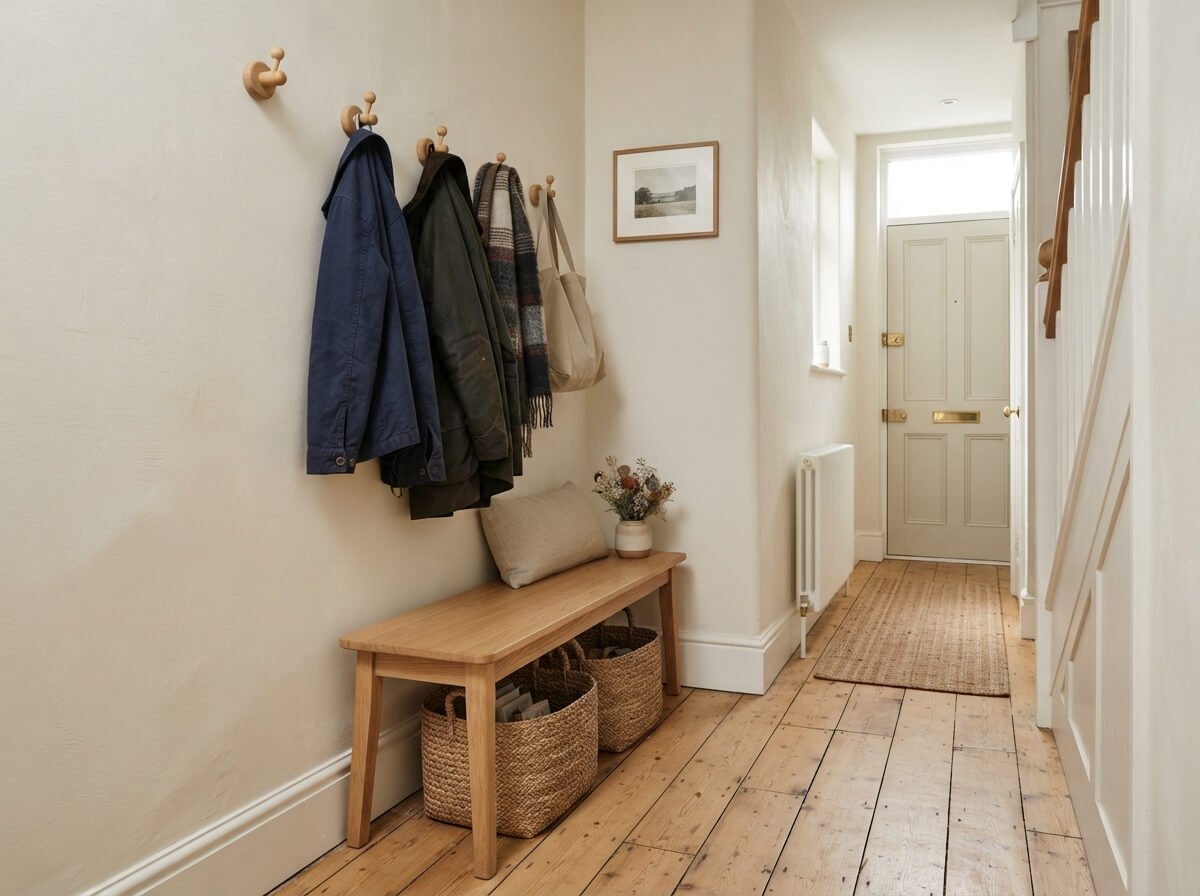
If your hallway has enough width, a small bench can make the space feel more welcoming while providing somewhere to sit when putting on shoes.
Choose a shallow design with open space or storage beneath.
Why it works
It combines function with warmth and gives an empty wall a clear purpose.
How to recreate it
Place the bench against the longest uninterrupted wall and keep enough room for comfortable movement.
Practical styling tip
One slim cushion or small lumbar cushion is usually enough.
Budget-friendly alternative
Use a simple wooden bench and add baskets underneath for storage.
7. Use Wall Hooks as Part of the Decor
Coat hooks do not have to look purely practical.
Wooden pegs, brass hooks or painted wall-mounted rails can become part of the hallway’s design.
Why it works
They add useful storage without requiring a bulky coat stand.
How to recreate it
Choose a finish that connects with other details, such as door handles, lighting or mirror frames.
Practical styling tip
Keep only current everyday coats on display.
Budget-friendly alternative
A simple timber peg rail can be painted to match the walls.
8. Introduce Warm, Layered Lighting
One central ceiling light can leave a hallway feeling flat, especially in the evening.
Where suitable, combine ceiling lighting with wall lights or a small table lamp.
Why it works
Different light sources add warmth and make the hallway feel more welcoming.
How to recreate it
Start with practical overhead lighting, then add a softer secondary source.
Practical styling tip
Choose warm-toned bulbs for a more comfortable atmosphere.
Budget-friendly alternative
If a table fits safely in the space, a compact lamp can add warmth without electrical work.
9. Try Half-Wall Panelling
Wall panelling can add character to a plain hallway without needing lots of decorative objects.
Shaker-style panelling, vertical battens or simple moulding can all work depending on the style of your home.
Why it works
It creates texture and architectural interest while keeping the floor clear.
How to recreate it
Choose a height that works with the proportions of the hallway and keep the design consistent.
Practical styling tip
Painting the panelling and lower wall in a slightly deeper tone can help disguise everyday scuffs.
Budget-friendly alternative
Lightweight decorative moulding can create a similar look to more expensive joinery.
10. Decorate With Baskets and Natural Textures
Natural materials can prevent a hallway from feeling too hard or formal.
A woven basket can hold scarves or umbrellas, while wood, linen and ceramic accessories add warmth.
Why it works
Natural textures create contrast against painted walls, tiled floors and smooth furniture.
How to recreate it
Choose two or three natural materials rather than introducing many different textures.
Practical styling tip
Use baskets for items that genuinely need a home rather than filling them with random clutter.
Budget-friendly alternative
Look for simple woven storage baskets in different sizes and use only one or two.
11. Style the End of a Long Hallway
The end wall of a long hallway naturally draws the eye.
Use it deliberately with one oversized artwork, a statement mirror, a painted accent wall or a small piece of furniture if there is enough space.
Why it works
It gives the eye somewhere intentional to land and makes the hallway feel designed from beginning to end.
How to recreate it
Choose one strong focal point and avoid adding several competing decorative features.
Practical styling tip
Repeat one colour from the end-wall feature elsewhere in the hallway for a cohesive look.
Budget-friendly alternative
Paint the end wall and add one framed print.
12. Make Storage Look Decorative
Storage can be part of the décor rather than something to hide.
A beautiful storage bench, a narrow cabinet or a set of coordinated baskets can make everyday organisation feel more intentional.
Why it works
A hallway that functions well is easier to keep visually calm.
How to recreate it
Identify what actually causes clutter before buying storage. Shoes, bags and coats may each need a different solution.
Practical styling tip
Use matching or complementary storage containers to reduce visual noise.
Budget-friendly alternative
Improve an existing cupboard with baskets, hooks and shelf dividers.
13. Add Greenery Without Crowding the Space
Plants can bring life to a hallway, but the size and position matter.
A tall, narrow plant can work in a bright corner, while a small trailing plant may suit a shelf or console.
For darker hallways, choose plants according to the available light or consider a realistic artificial alternative.
Why it works
Greenery adds colour and softness to an area that can otherwise feel hard and functional.
How to recreate it
Keep the planter proportional to the available floor space.
Practical styling tip
Use one larger plant instead of several tiny pots scattered around the hallway.
Budget-friendly alternative
A single realistic artificial stem in a simple vase can add a similar decorative effect.
14. Choose a Cohesive Colour Palette
A hallway often connects several rooms, so it helps to choose colours that work with the spaces around it.
Warm neutrals create a calm base. Muted greens and blues can add personality. A deeper colour on a feature wall can create contrast.
Why it works
A limited palette makes the hallway feel visually connected rather than pieced together.
How to recreate it
Choose one main wall colour, one or two accent tones and one material finish such as oak, brass or black.
Practical styling tip
Look at the colours visible through open doorways before finalising your paint choices.
Budget-friendly alternative
Introduce your accent colour through a runner, artwork and cushions rather than repainting the entire space.
15. Use Vertical Space for Decoration
When floor space is limited, look upwards.
Tall artwork, vertical mirrors, peg rails and narrow shelving can add function and personality without making the hallway harder to move through.
Why it works
It makes use of wall height while protecting the walking route.
How to recreate it
Choose wall décor that feels proportional to the height and width of the hallway.
Practical styling tip
Avoid filling every wall. Leaving some blank space can make the room feel calmer.
Budget-friendly alternative
Create a vertical arrangement using affordable frames or a simple wall shelf.
16. Mix Old and New for a More Personal Entrance
A hallway does not need to look like every item was bought at the same time.
Pair a modern mirror with a vintage wooden bench, or combine contemporary wall lights with an inherited chest of drawers.
Why it works
The contrast can make a hallway feel collected and personal rather than overly coordinated.
How to recreate it
Use colour or material to connect the different pieces.
Practical styling tip
Choose one or two older pieces rather than turning the hallway into a collection of unrelated furniture.
Budget-friendly alternative
Look for second-hand mirrors, benches and frames that can be cleaned, painted or lightly restored.
17. Create a Small Drop Zone Near the Door
A drop zone gives keys, post and everyday essentials a designated place.
This could be a shallow shelf, a small tray on a console or a wall-mounted organiser.
Why it works
It reduces the chance of everyday objects spreading across the hallway.
How to recreate it
Think about what you naturally put down when entering the house and create storage specifically for those items.
Practical styling tip
Keep the drop zone small enough that it does not become another dumping area.
Budget-friendly alternative
Use a decorative tray and a set of wall hooks.
18. Keep the Floor as Clear as Possible
One of the simplest hallway decor ideas is also one of the most effective: remove anything that does not need to live on the floor.
Shoes, bags, baskets and decorative objects can quickly make an entrance feel cramped.
Why it works
A clear walking route improves both the appearance and everyday usability of the hallway.
How to recreate it
Take a photograph of your hallway and identify every item touching the floor. Move, store or remove anything that is not essential.
Practical styling tip
Choose one or two floor-based decorative elements at most, such as a runner and a plant.
Budget-friendly alternative
This idea costs nothing and can be the best first step before buying new décor.
Best Hallway Decor Ideas for Small Spaces
Small hallways benefit from a more selective approach.
Start with wall-mounted storage, a large mirror and a runner sized correctly for the space. If you add furniture, choose pieces with a shallow depth.
Good options include:
- Floating shelves instead of deep console tables
- Wall hooks instead of freestanding coat stands
- Slim shoe cabinets instead of open racks
- Tall mirrors instead of several smaller pieces
- One larger artwork instead of many tiny decorations
The aim is not to leave the hallway empty. It is to make every item earn its place.
A Quick Guide to Choosing the Right Hallway Decor
| Your hallway | Best decor choice | Consider adding |
|---|---|---|
| Narrow | Tall mirror or wall-mounted art | Slim runner |
| Dark | Mirror | Layered lighting |
| Large and empty | Console table | Gallery wall |
| Busy family entrance | Closed storage | Durable runner |
| Rented home | Artwork and freestanding pieces | Removable hooks |
| Period property | Panelling or vintage pieces | Traditional lighting |
| Modern home | Clean-lined mirror | Minimal accessories |
Common Hallway Decor Mistakes to Avoid
Adding Furniture That Is Too Deep
Measure the walking route before buying anything. A beautiful console is not useful if everyone has to squeeze past it.
Displaying Too Many Small Accessories
Several candles, frames, baskets and decorative objects can quickly become visual clutter. Choose fewer, larger pieces.
Ignoring Practical Storage
A hallway can look beautiful on the day you decorate it, but it will not stay that way if shoes and bags have nowhere to go.
Using Only One Light Source
A single harsh ceiling light can make even well-chosen décor feel flat.
Forgetting What the Mirror Reflects
Always check the view before fixing a mirror to the wall.
FAQs About Hallway Decor Ideas
How can I decorate a hallway on a budget?
Start with what makes the biggest visual difference: decluttering, paint, a mirror and affordable artwork. A runner or simple wall hooks can add personality without requiring a full makeover.
What should I put on a hallway console table?
Keep it practical and simple. A lamp, small tray for keys, vase or plant and one decorative object are usually enough.
How do I make a small hallway look stylish?
Use fewer, more purposeful pieces. Wall-mounted storage, a large mirror, good lighting and one patterned runner can create a polished look without crowding the space.
What colour is best for a hallway?
There is no single best colour. Warm neutrals work well for a calm, flexible look, while muted greens, blues and deeper feature colours can add more personality.
Should I put a rug in my hallway?
A runner can add warmth and colour, particularly in a long or plain hallway. Choose a durable style that leaves visible flooring around the edges.
How can I make a dark hallway feel brighter?
Improve the lighting, use a mirror to reflect available light and choose wall colours that suit the natural light level.
How do I decorate a rented hallway?
Focus on removable or freestanding elements such as artwork, runners, mirrors, storage baskets and furniture. Check your tenancy agreement before making permanent changes.
Conclusion
The best hallway decor ideas balance style with the way your home actually works. A large mirror may solve a dark entrance, while a runner can bring warmth to a plain corridor. A console, bench or storage cabinet can be useful, but only if it fits comfortably within the available space.
Start by identifying what your hallway is missing most: light, storage, personality or warmth. Then choose one or two changes that solve that problem rather than adding decoration simply for the sake of it.
With a clear colour palette, practical storage and a few well-chosen details, even a small or overlooked hallway can become a welcoming part of your home.