A chocolate brown bedroom can feel warm, elegant, and surprisingly modern when the color is balanced with the right fabrics, lighting, and lighter tones. Whether you want a dramatic cocooning bedroom or a softer brown scheme for a small room, there are plenty of ways to make this rich shade work in a real home.
From chocolate brown walls and bedding to clever combinations with cream, beige, pink, and natural wood, these ideas will help you create a bedroom that feels inviting rather than heavy.
1. Paint the Walls Chocolate Brown
Using chocolate brown across the walls is one of the most effective ways to create a cosy bedroom with a strong sense of character.
The only woodworking guide built for small spaces and complete beginners. Master 3 real projects using just 5 affordable hand tools even if you live in a studio apartment.


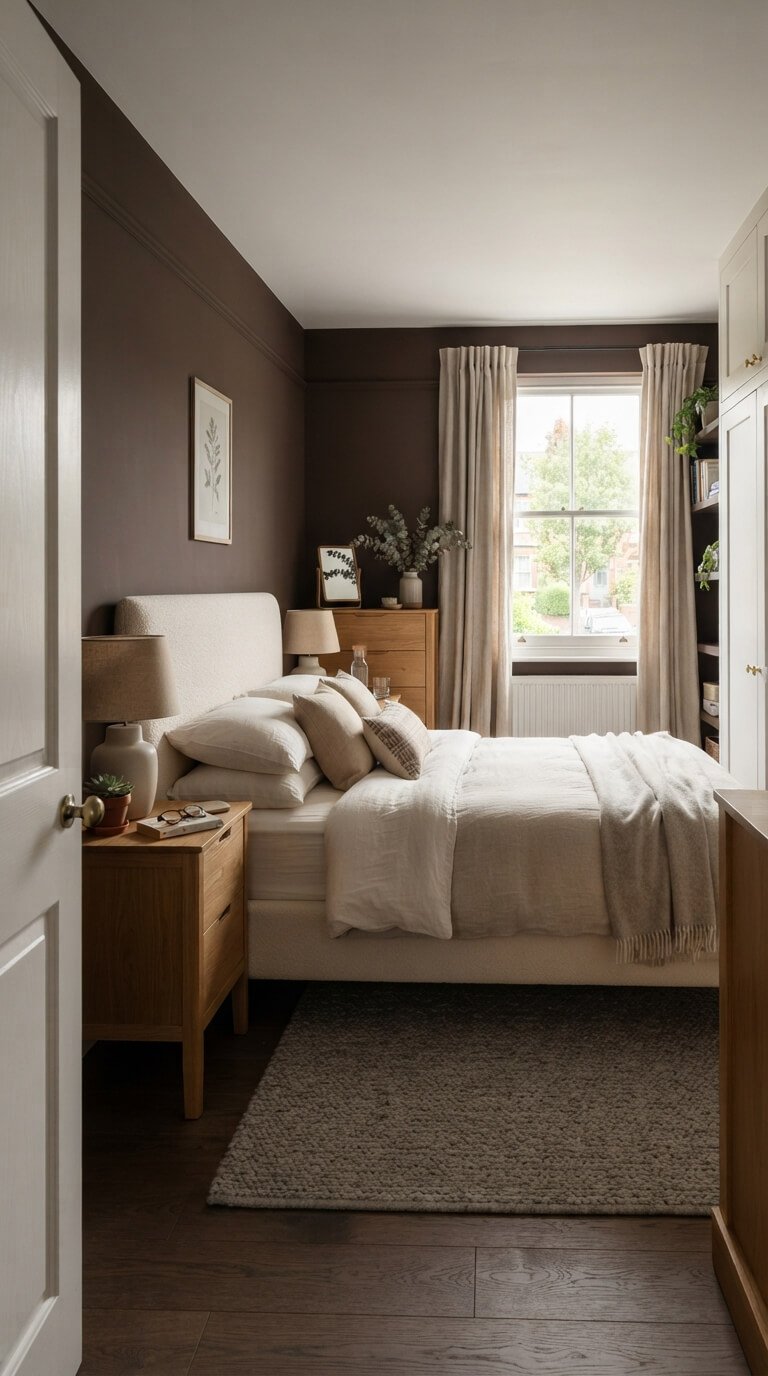
Rather than looking cold or stark, a deep brown can give the room a grounded, enveloping feel. It works particularly well in bedrooms because the deeper colour suits a relaxed evening atmosphere.
How to recreate it
Choose a warm chocolate brown rather than a brown with a strong grey or red undertone. Paint all four walls for a dramatic look, or use the shade behind the bed if you prefer something more restrained.
Pair the walls with a cream upholstered bed, pale bedding and warm-toned timber.
Styling tip: Keep the ceiling and larger pieces of furniture relatively light if you want the room to feel balanced.
Budget alternative: Instead of repainting the entire room, create a chocolate brown feature wall behind the bed.
2. Combine Chocolate Brown With Cream Bedding
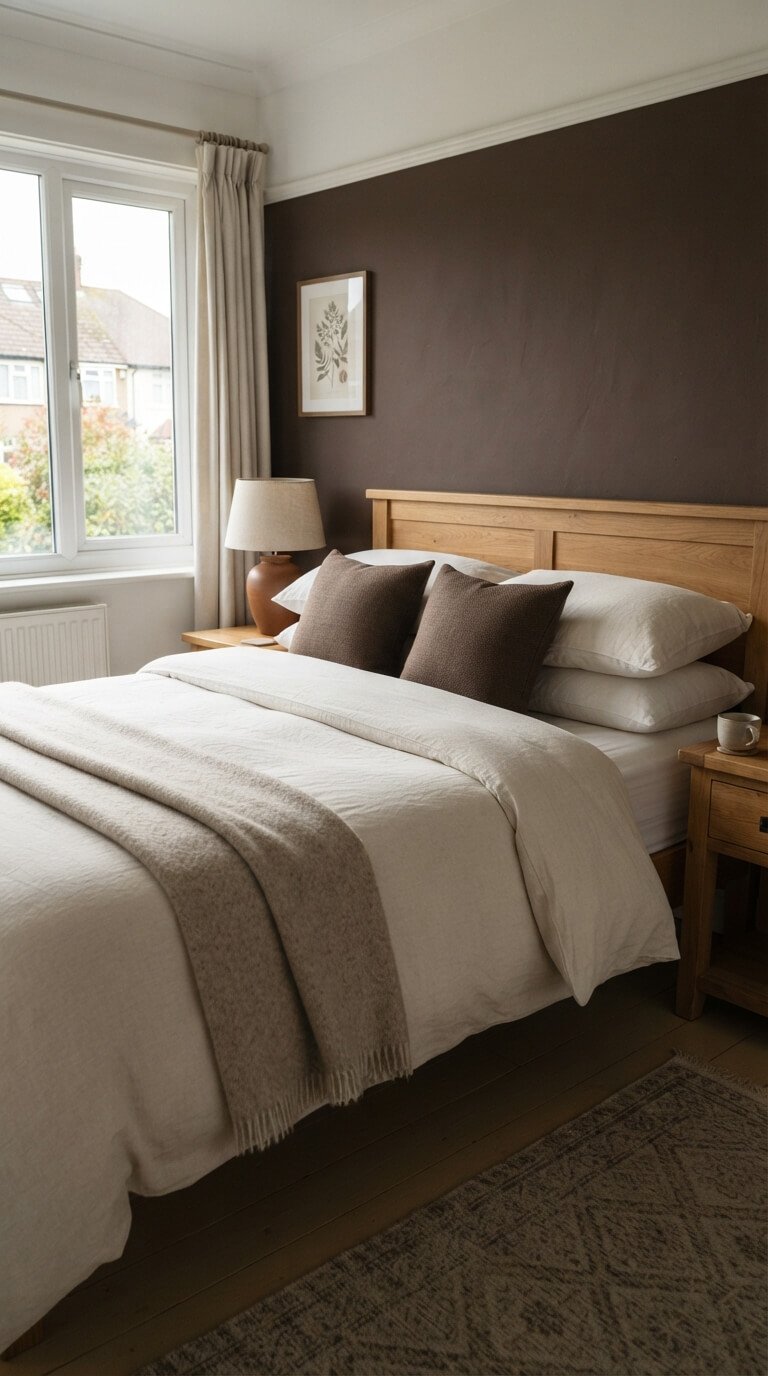
If dark walls feel too dramatic, cream bedding is one of the easiest ways to soften a chocolate brown bedroom.
The contrast between deep brown and warm cream creates a classic combination without making the room look overly formal.
How to recreate it
Start with cream or ivory duvet covers and sheets. Add a few textured cushions in beige, taupe or muted brown.
Choose natural-looking fabrics such as cotton, linen or brushed textures to prevent the scheme from feeling flat.
Styling tip: Layer several slightly different neutral shades instead of trying to match everything perfectly.
Budget alternative: Use an existing cream duvet cover and add one chocolate brown throw or cushion rather than replacing the whole bedding set.
3. Create a Chocolate Brown Feature Wall Behind the Bed
A feature wall is particularly useful if you like the idea of brown but do not want the whole bedroom painted dark.
The wall behind the bed naturally becomes the focal point, so a rich chocolate shade can make the bed feel more substantial and intentional.
How to recreate it
Paint the wall behind the headboard chocolate brown and keep the remaining walls a warm off-white, beige or soft neutral.
Use matching brown through smaller accessories so the feature wall feels connected to the rest of the room.
Styling tip: A large upholstered headboard in cream, oatmeal or natural beige looks especially effective against dark brown.
Budget alternative: Use removable wallpaper or a large painted section rather than redecorating the entire room.
The only woodworking guide built for small spaces and complete beginners. Master 3 real projects using just 5 affordable hand tools even if you live in a studio apartment.
4. Layer Different Shades of Brown
A chocolate brown bedroom does not need to rely on one exact shade.
Layering espresso, cocoa, caramel, tan and warm beige creates depth while keeping the overall palette cohesive.
How to recreate it
Use the darkest brown on the walls or bed frame, medium chocolate shades for cushions and throws, and lighter caramel or tan shades for smaller decorative details.
Natural wood can provide another variation without making the scheme look overly coordinated.
Styling tip: Change the texture as well as the shade. Velvet, linen, wool, cotton and timber will make a brown palette feel much richer.
Budget alternative: Rearrange existing brown, beige and tan accessories before buying anything new.
5. Add Natural Wood Furniture
Chocolate brown and natural wood make an easy pairing because both have warm, earthy qualities.
Wood furniture can also stop a dark bedroom from feeling visually flat.
How to recreate it
Look for oak, walnut or medium-toned wooden bedside tables, a simple wooden bed frame or a timber chest of drawers.
If the walls are very dark, avoid filling every surface with dark furniture. One or two wood pieces are usually enough.
Styling tip: Choose furniture with visible grain rather than heavily lacquered finishes for a more relaxed bedroom.
Budget alternative: A second-hand wooden bedside table can provide the same warm effect for considerably less.
6. Use Chocolate Brown Bedding in a Light Bedroom
You do not need brown walls to achieve the look.
A chocolate brown duvet, quilt or bedspread can introduce the colour while allowing the rest of the room to remain light and airy.
How to recreate it
Keep the walls warm white, ivory or pale beige. Make the bed the main brown element, then repeat the shade in one or two cushions, a rug or bedside accessory.
This approach is particularly useful for rented homes where painting may not be an option.
Styling tip: Combine chocolate brown bedding with cream sheets so the bed does not become one solid block of dark colour.
Budget alternative: A brown throw folded across the bottom third of the bed can introduce the colour without purchasing a complete bedding set.
7. Pair Chocolate Brown With Soft Pink
For a bedroom that feels warmer and more feminine, chocolate brown works beautifully with dusty pink, blush and muted rose tones.
The pink adds softness while the brown prevents the palette from becoming too sweet.
How to recreate it
Use chocolate brown as the grounding colour and introduce pink through cushions, bedding, curtains or artwork.
Choose dusty or muted pink rather than very bright pink for a more sophisticated result.
Styling tip: Add cream between the two colours to create a smoother transition.
Budget alternative: Start with two pink cushions or a small pink throw rather than changing the entire colour scheme.
8. Bring in Brass or Antique Gold Details
Small metallic details can give a chocolate brown bedroom a polished appearance.
Warm brass and antique gold generally sit comfortably alongside rich brown because they share a warm undertone.
How to recreate it
Try brass bedside lamps, drawer handles, picture frames or a small decorative mirror.
You do not need metallic pieces everywhere. A few carefully chosen details are enough.
Styling tip: Repeat the finish in two or three places so it looks intentional rather than random.
Budget alternative: Replace existing handles on a bedside cabinet with inexpensive brass-effect hardware.
9. Choose Warm Lighting for a Cosy Brown Bedroom
Lighting is especially important when using deep brown because cool, harsh bulbs can make the colour look dull.
Warm lighting helps maintain the cosy quality that makes chocolate brown so appealing.
How to recreate it
Use bedside lamps with warm-toned bulbs and consider wall lights if space is limited.
A small table lamp on a chest of drawers can create another pool of light rather than relying entirely on one ceiling fixture.
Styling tip: Aim for several smaller light sources instead of one very bright central light.
Budget alternative: Change the bulbs in your existing lamps before buying new lighting.
10. Add Cream and Beige Curtains
Curtains are an easy way to introduce a lighter colour into a dark brown bedroom.
Cream, oatmeal and warm beige curtains can soften chocolate brown walls while still keeping the room cosy.
How to recreate it
Choose curtains that are slightly lighter than the bedding or upholstery. Linen-look fabrics work particularly well for a relaxed bedroom.
If the window is small, keep the treatment simple and avoid heavy, bulky layers.
Styling tip: Hang curtains slightly wider than the window where possible to make the window feel more generous.
Budget alternative: Use simple ready-made neutral curtains instead of custom-made treatments.
11. Try a Chocolate Brown Upholstered Headboard
An upholstered headboard can introduce chocolate brown without committing to dark walls.
It also gives the bed a substantial, comfortable appearance.
How to recreate it
Choose a deep brown fabric headboard against a light neutral wall. Add cream or beige bedding to create contrast.
For a more luxurious look, consider velvet; for a relaxed bedroom, linen-look upholstery can work beautifully.
Styling tip: Keep bedside tables visually simple so the headboard remains the main feature.
Budget alternative: A padded headboard cushion or DIY upholstered panel can create a similar visual effect for less.
12. Use a Chocolate Brown Rug to Ground the Room
If your bedroom has pale walls and furniture, a brown rug can help anchor the colour scheme.
It is also a practical way to introduce chocolate brown without making permanent changes.
How to recreate it
Position a rug partially underneath the bed so the brown becomes part of the main sleeping zone.
Choose a warm neutral pattern if a solid brown rug feels too heavy.
Styling tip: Make sure at least one other element in the room repeats the brown, such as a cushion, throw or bedside lamp.
Budget alternative: Use a smaller rug at each side of the bed rather than buying one large bedroom rug.
13. Keep a Small Chocolate Brown Bedroom Light
Deep brown can work in a small bedroom, but balance is important.
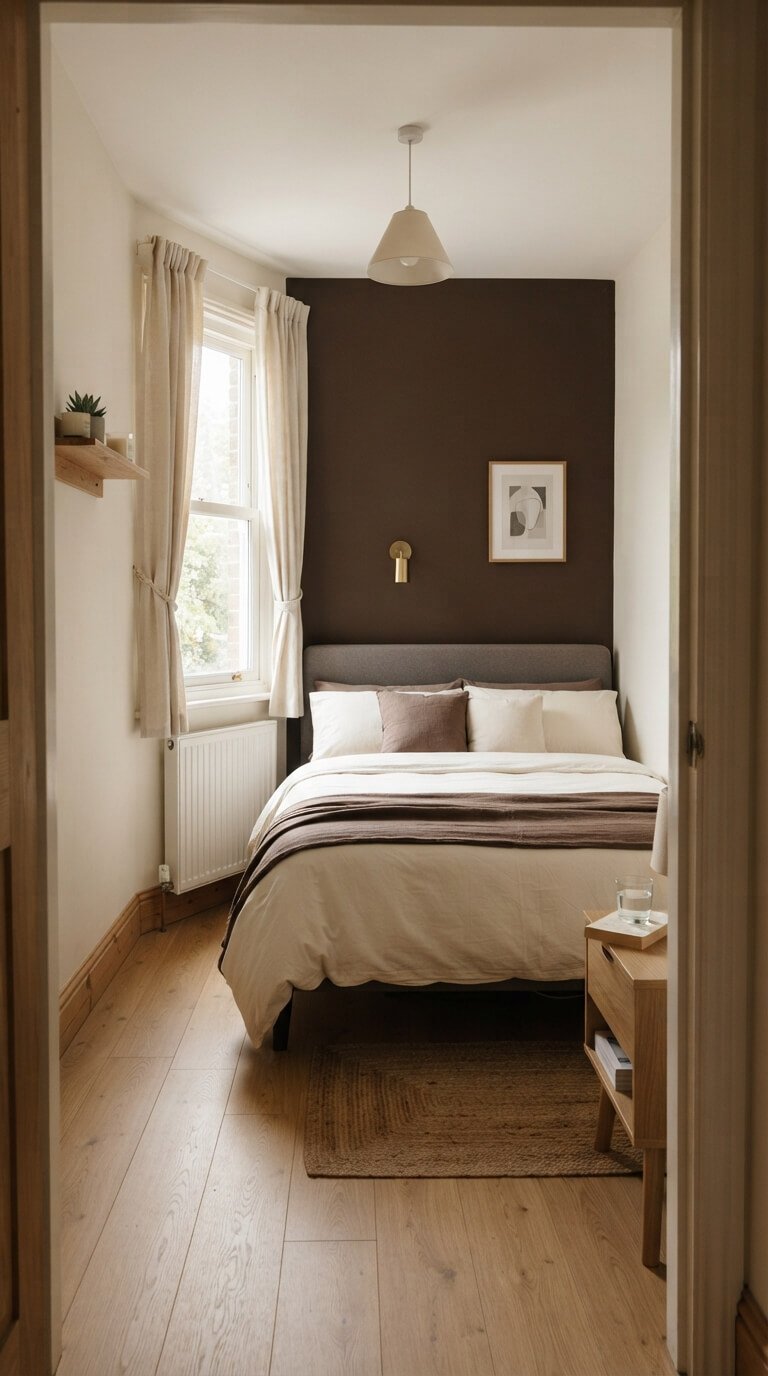
Instead of covering every surface in dark colour, use chocolate brown as an accent and give lighter shades plenty of visual space.
How to recreate it
Try brown behind the bed, brown bedding or one substantial brown furniture piece. Keep the ceiling, curtains and larger areas of flooring relatively light.
Mirrors can also help reflect available daylight.
Styling tip: Keep the floor visually clear and avoid filling the room with too many decorative accessories.
Budget alternative: Introduce brown through textiles rather than paint or furniture.
14. Mix Chocolate Brown With Black for a Modern Look
Brown does not always have to create a traditional or rustic bedroom.
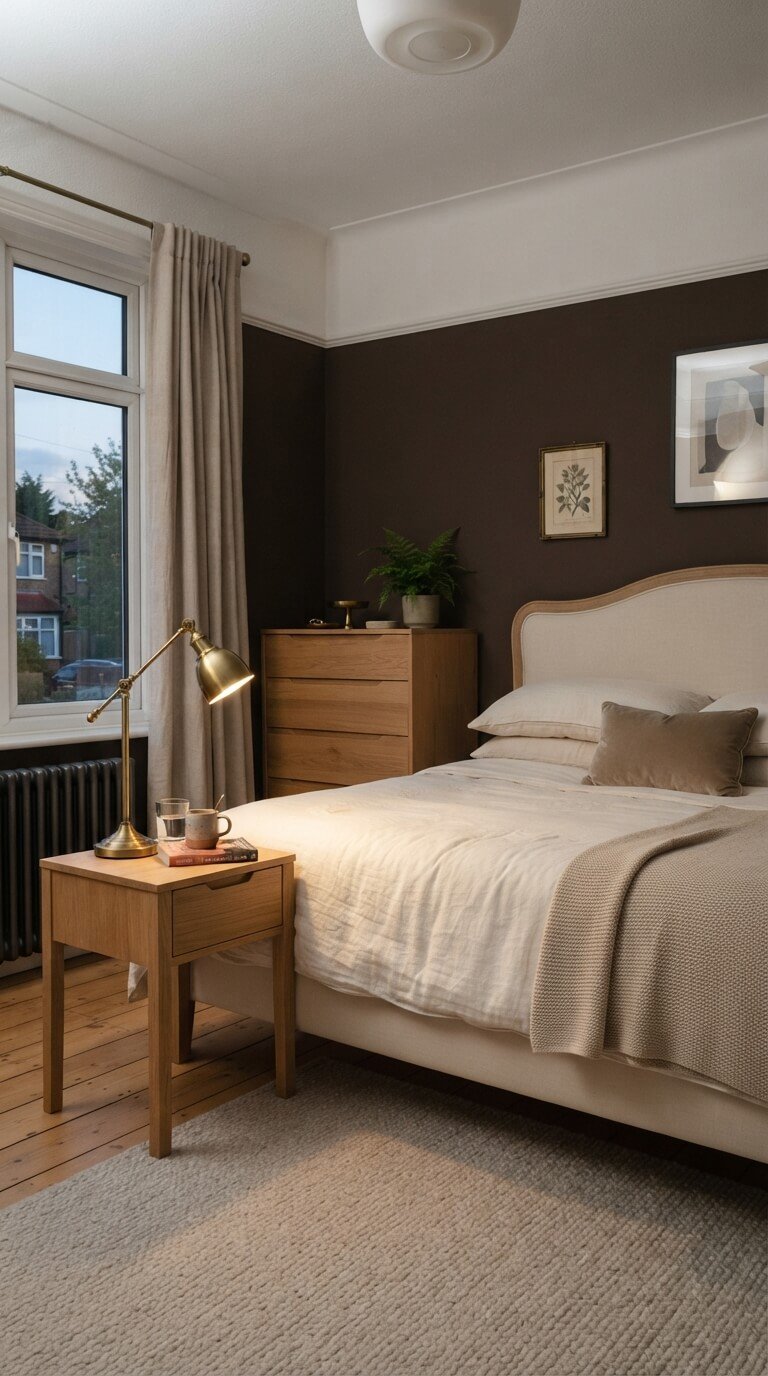
Combined with controlled amounts of black, it can look sophisticated and contemporary.
How to recreate it
Use chocolate brown as the warm base and introduce black through slim lighting, picture frames, bedside tables or curtain poles.
Keep the black elements relatively simple.
Styling tip: Add cream or warm white somewhere in the room to stop the combination becoming too dark.
Budget alternative: Black frames and existing black lamps can provide enough contrast without replacing furniture.
15. Add Texture With Throws, Cushions and Bedding
A monochromatic brown bedroom can look beautiful, but it needs texture to avoid appearing flat.
Different materials create visual interest even when the colours remain similar.
How to recreate it
Combine a smooth cotton duvet with a chunky knitted throw, velvet cushion and linen-look curtains.
Stay within a palette of chocolate, cocoa, caramel, beige and cream.
Styling tip: Use texture strategically rather than covering every surface. The bed is the best place to layer fabrics.
Budget alternative: Add one textured throw and one cushion to existing neutral bedding.
16. Use Artwork to Break Up Dark Walls
Artwork is particularly useful when you have painted the bedroom walls a deep chocolate colour.
It breaks up a large expanse of brown while giving you an opportunity to introduce lighter colours.
How to recreate it
Choose artwork with cream, beige, muted green, dusty pink or terracotta details.
Large artwork above the bed can become a strong focal point, while a small collection of frames can work well on a side wall.
Styling tip: Look for artwork that contains at least one colour already present in your bedding or accessories.
Budget alternative: Frame inexpensive prints or create a simple gallery wall using photographs and existing frames.
17. Add Plants for a Natural Contrast
Greenery provides a fresh contrast against chocolate brown and natural timber.
Even a small plant can make a deep colour scheme feel more alive.
How to recreate it
Place a medium-sized plant near a window or choose a compact plant for a bedside table.
Terracotta pots, woven baskets and simple ceramic planters can complement the warm palette.
Styling tip: Avoid overcrowding the room with plants. One or two well-positioned plants can be more effective than lots of small pots.
Budget alternative: Use a small inexpensive houseplant or a realistic faux plant if the room has limited natural light.
18. Finish With a Warm, Minimalist Chocolate Brown Scheme
If you prefer uncluttered interiors, chocolate brown can create a calm backdrop without needing lots of decoration.
The key is to let the colour, materials and proportions do the work.
How to recreate it
Choose chocolate brown walls or bedding, cream textiles, natural wood furniture and one or two carefully selected decorative pieces.
Keep bedside surfaces tidy and avoid filling every available wall.
Styling tip: Prioritise quality-looking textures and simple shapes over lots of accessories.
Budget alternative: Declutter first, then work with what you already own. A restrained palette can make existing furniture look more cohesive.
Best Chocolate Brown Bedroom Ideas for Small Spaces
A small bedroom does not automatically rule out deep brown. The trick is controlling where the darker colour appears.
The easiest options are:
- A chocolate brown feature wall behind the bed
- Brown bedding with warm white walls
- A chocolate brown upholstered headboard
- A dark brown rug with lighter furniture
- Chocolate brown cushions and throws against cream bedding
- Brown furniture combined with pale walls
- Warm lighting paired with lighter curtains
If your room receives limited daylight, avoid using dark brown on every wall unless you specifically want a dramatic, cocooning effect.
For a brighter appearance, combine brown with cream, warm white, pale beige and reflective surfaces.
Budget-Friendly Ways to Create a Chocolate Brown Bedroom
You do not need to redecorate the entire room to get the look.
Start with the largest visual element you can change affordably. In many bedrooms, that will be the bedding.
A chocolate brown throw, two cushions and a neutral rug can introduce the colour for relatively little money. Alternatively, paint just the wall behind the bed instead of the whole room.
Other inexpensive changes include:
- Changing lampshades
- Replacing drawer handles with brass-effect versions
- Adding cream curtains
- Framing affordable artwork
- Introducing one wooden accessory
- Using a textured throw
- Adding a small plant
- Rearranging existing furniture to give the room more breathing space
The best budget makeover usually comes from repeating a colour two or three times rather than buying lots of matching accessories.
How to Choose the Right Chocolate Brown Look
Think about the atmosphere you want before choosing your exact shade.
| If you want… | Try… | Best supporting colours |
|---|---|---|
| Cosy and dramatic | Brown walls | Cream, beige, warm white |
| Light and relaxed | Brown bedding | Ivory, oatmeal, natural wood |
| Feminine and soft | Brown + pink | Blush, cream, muted rose |
| Modern | Brown + black | Warm white, brass |
| Natural | Brown + wood | Olive, beige, terracotta |
| Luxurious | Brown + brass | Cream, caramel, champagne tones |
| Minimalist | Brown + neutrals | Beige, ivory, pale timber |
Common Chocolate Brown Bedroom Mistakes to Avoid
Using too many dark colours: Chocolate brown can be the main feature, but adding dark furniture, dark curtains and dark flooring can make a smaller room feel visually crowded.
Ignoring lighting: A brown bedroom can look completely different under warm and cool lighting. Check your chosen paint or fabrics at different times of day.
Making everything the same shade: A room full of identical brown can look flat. Introduce cream, beige, wood and different textures.
Over-accessorising: Rich brown already has visual weight. You generally need fewer decorative pieces, not more.
Choosing the wrong undertone: Some browns lean red, grey, yellow or almost black. Look at samples in the actual bedroom before committing.
Forgetting the ceiling: If the walls are very dark, a warm white or pale neutral ceiling can help preserve a sense of height.
Chocolate Brown Bedroom FAQs
Is chocolate brown a good bedroom colour?
Yes. It can create a warm, intimate and sophisticated atmosphere. The result depends heavily on lighting and the colours used alongside it.
What colours go best with chocolate brown in a bedroom?
Cream, warm white, beige, natural wood, dusty pink, muted green, terracotta, brass and selected black accents can all work well with chocolate brown.
Can I use chocolate brown in a small bedroom?
Absolutely. For a small room, consider using it on one feature wall, through bedding or on one major furniture piece, while keeping other large surfaces lighter.
Does chocolate brown make a bedroom look smaller?
It can visually reduce the sense of space when used across every surface, particularly in a poorly lit room. However, a carefully positioned dark feature wall can make the room feel cosy rather than cramped.
What bedding looks best with chocolate brown walls?
Cream, ivory, beige and warm white bedding are easy choices. For more colour, muted pink, terracotta or olive accents can work beautifully.
What metal goes with chocolate brown?
Warm brass and antique gold are especially natural pairings. Black metal can also work when you want a more contemporary look.
How can I make a dark brown bedroom feel brighter?
Use lighter bedding and curtains, keep some wall space uncluttered, add warm layered lighting and incorporate reflective surfaces such as mirrors. Natural timber can also prevent the room from feeling overly heavy.
Conclusion
A chocolate brown bedroom can be dramatic, soft, modern or wonderfully cosy depending on how you balance the colour. For a small room, brown bedding, a feature wall or an upholstered headboard are easy starting points. If you want a richer makeover, combine chocolate walls with cream textiles, natural wood, warm lighting and carefully chosen brass details.
The most successful schemes do not rely on one shade of brown. Layer chocolate, cocoa, caramel, beige and cream through different materials to create a bedroom that feels warm, considered and comfortable without becoming overwhelming.