
Rosh Hashanah Recipes: 35 Traditional & Delicious Ideas for a Sweet New Year
Rosh Hashanah is a wonderful time to bring family and friends around the table with food that feels festive, comforting and meaningful. From apples dipped in honey and round challah to tender brisket, sweet tzimmes, pomegranate dishes and honey cake, Rosh Hashanah food combines traditional flavours with plenty of room for personal and family favourites.
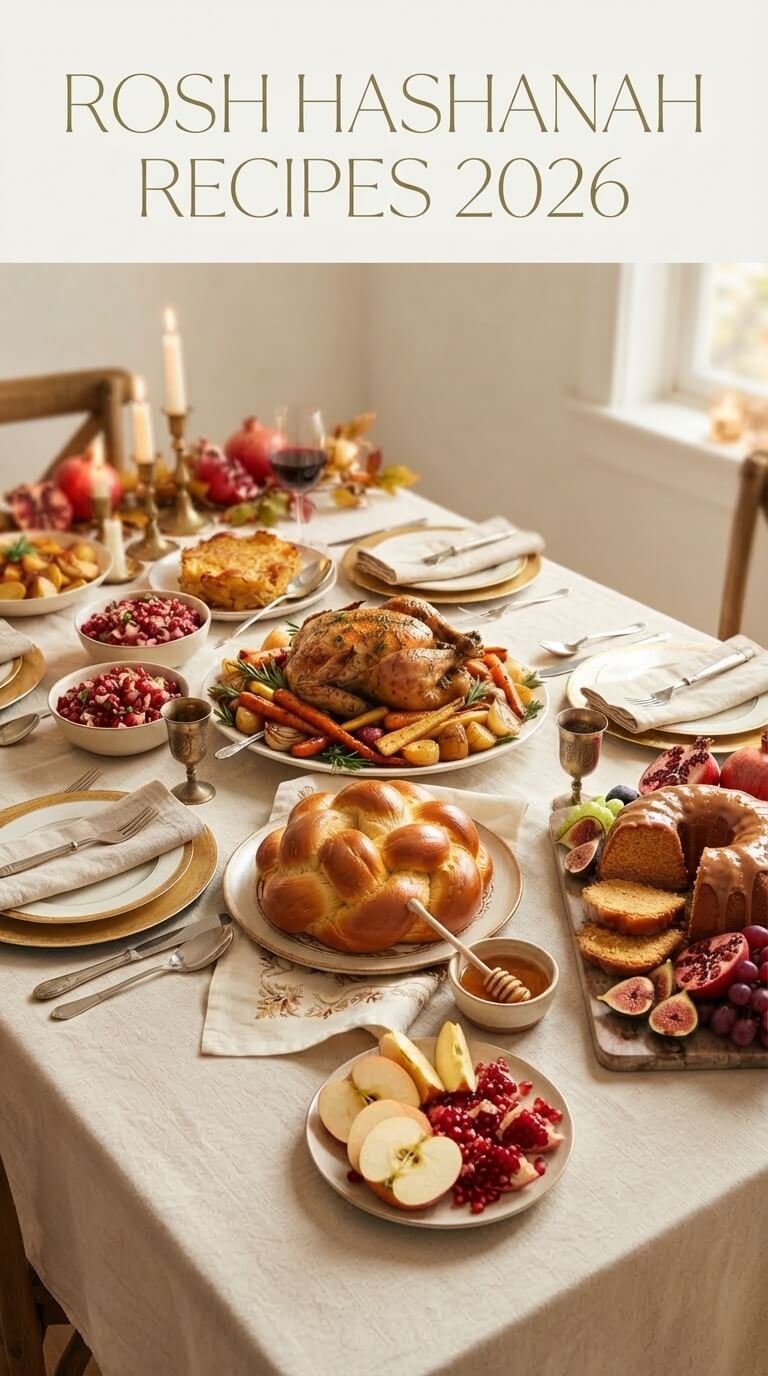
If you are looking for Rosh Hashanah recipes, Rosh Hashanah dinner ideas, traditional Jewish New Year recipes or an easy Rosh Hashanah menu, this guide brings everything together in one place.
Rosh Hashanah 2026 begins at sunset on 11 September 2026 and ends at nightfall on 13 September 2026.
The food traditions of the holiday often centre around sweetness and symbolic foods. Apples and honey are especially well known, while round challah, pomegranate, carrots, dates, leeks, squash and other foods may appear depending on family and community tradition.
Quick Answer: What Food Do You Serve on Rosh Hashanah?
A traditional Rosh Hashanah menu can include:
- Round challah dipped in honey
- Apples and honey
- Pomegranate
- Honey-glazed carrots or tzimmes
- Brisket or roast chicken
- Roasted vegetables
- Potato or apple kugel
- Rice with dried fruit and nuts
- Green beans or leeks
- Honey cake
- Apple cake
- Pomegranate desserts
- Honey cookies
- Fresh fruit and festive drinks
There is no single menu that every Jewish family follows. Food customs differ between Ashkenazi, Sephardi, Mizrahi and other Jewish communities, so the best Rosh Hashanah menu is one that fits your own family traditions.
35 Rosh Hashanah Recipes to Make in 2026
1. Apples and Honey
No list of Rosh Hashanah food ideas would be complete without apples and honey.
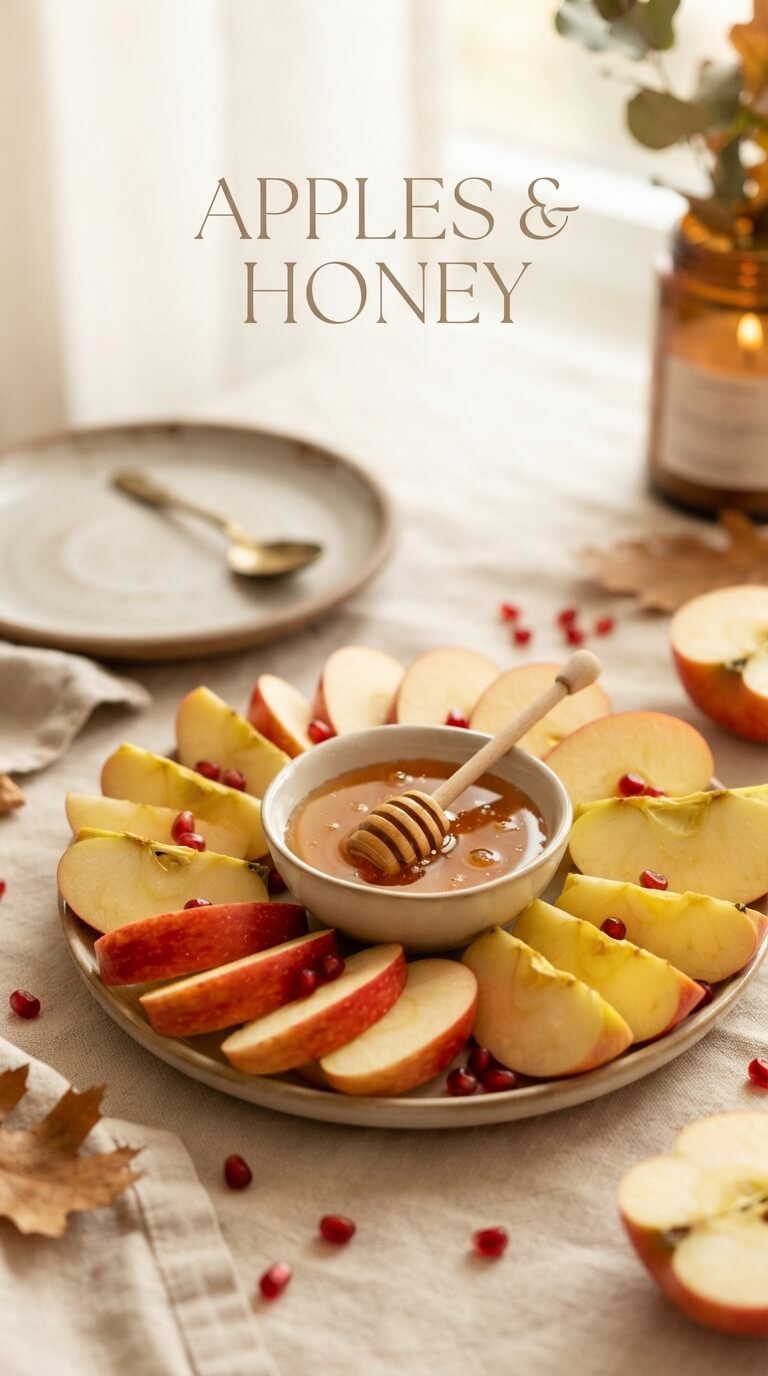
Serve crisp apple slices with a small bowl of honey for dipping. It is simple, beautiful and perfect for the beginning of a festive meal.
Apples dipped in honey are traditionally associated with the hope for a good and sweet year. The custom is especially prominent on the first night.
For a prettier presentation, arrange several apple varieties on a large platter with honey in the centre.
2. Round Rosh Hashanah Challah
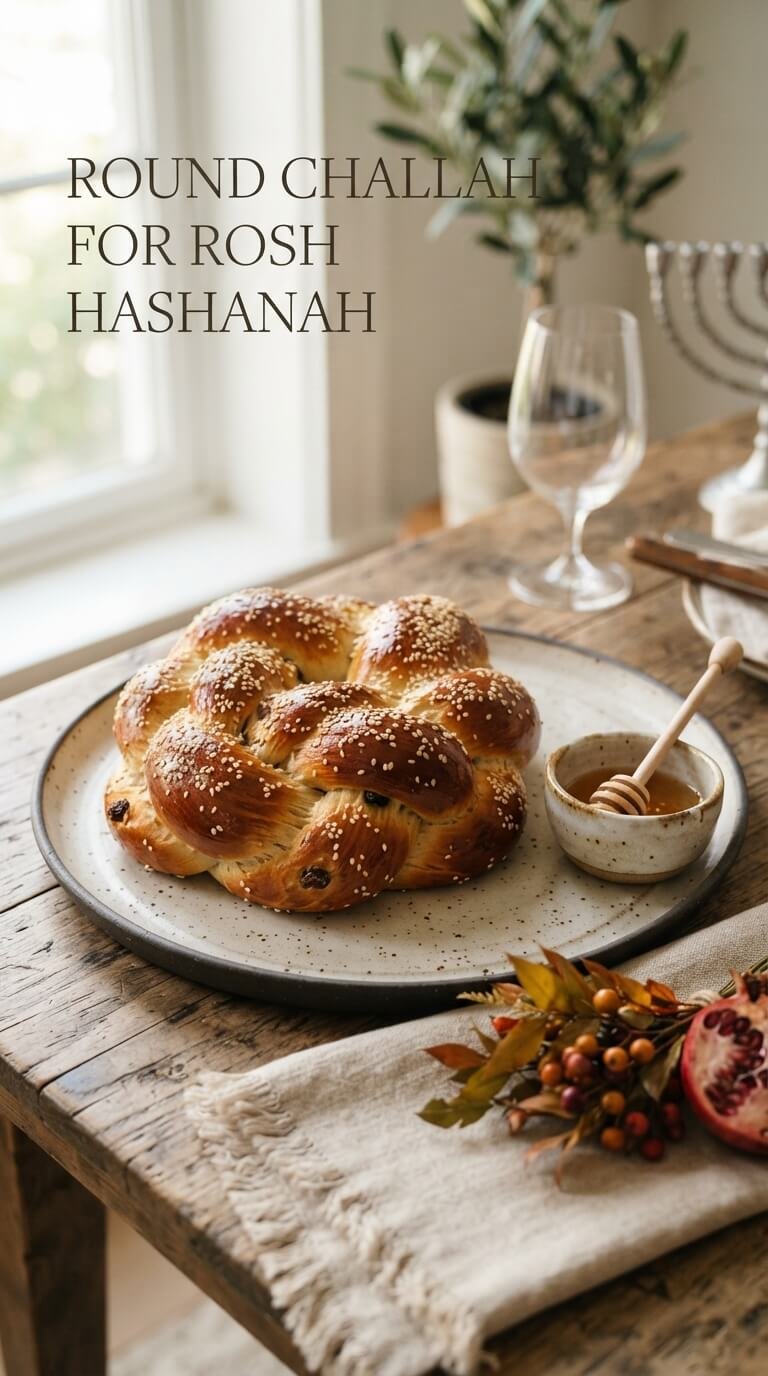
Round challah is one of the most recognisable Rosh Hashanah recipes.
Unlike the long braided challah commonly associated with Shabbat, Rosh Hashanah challah is traditionally made in a round shape. Some versions include raisins for extra sweetness.
Serve it warm and provide honey alongside it.
Round challah and honey are traditional parts of the festive meal and express wishes for sweetness in the coming year.
3. Honey Challah
For an even sweeter variation, prepare challah with honey incorporated into the dough.
The result is soft, lightly sweet and ideal for a festive dinner table. You can also add raisins, cinnamon or a little orange zest depending on your family recipe.
4. Pomegranate Salad
Pomegranate adds colour, freshness and a jewel-like appearance to the Rosh Hashanah table.
Combine pomegranate seeds with:
- Mixed greens
- Cucumber
- Fresh herbs
- Toasted nuts
- A light honey-lemon dressing
Pomegranate is one of the symbolic foods associated with Rosh Hashanah, including traditions expressing the wish that one’s merits be as numerous as its seeds.
5. Honey-Glazed Carrots
Sweet carrots are an easy side dish for a Rosh Hashanah dinner.
Roast or sauté carrots with honey, olive oil or butter, a little salt and fresh herbs.
For an autumn-inspired version, add cinnamon or orange zest.
6. Classic Tzimmes
Tzimmes is a classic sweet vegetable dish that fits beautifully into a Rosh Hashanah menu.
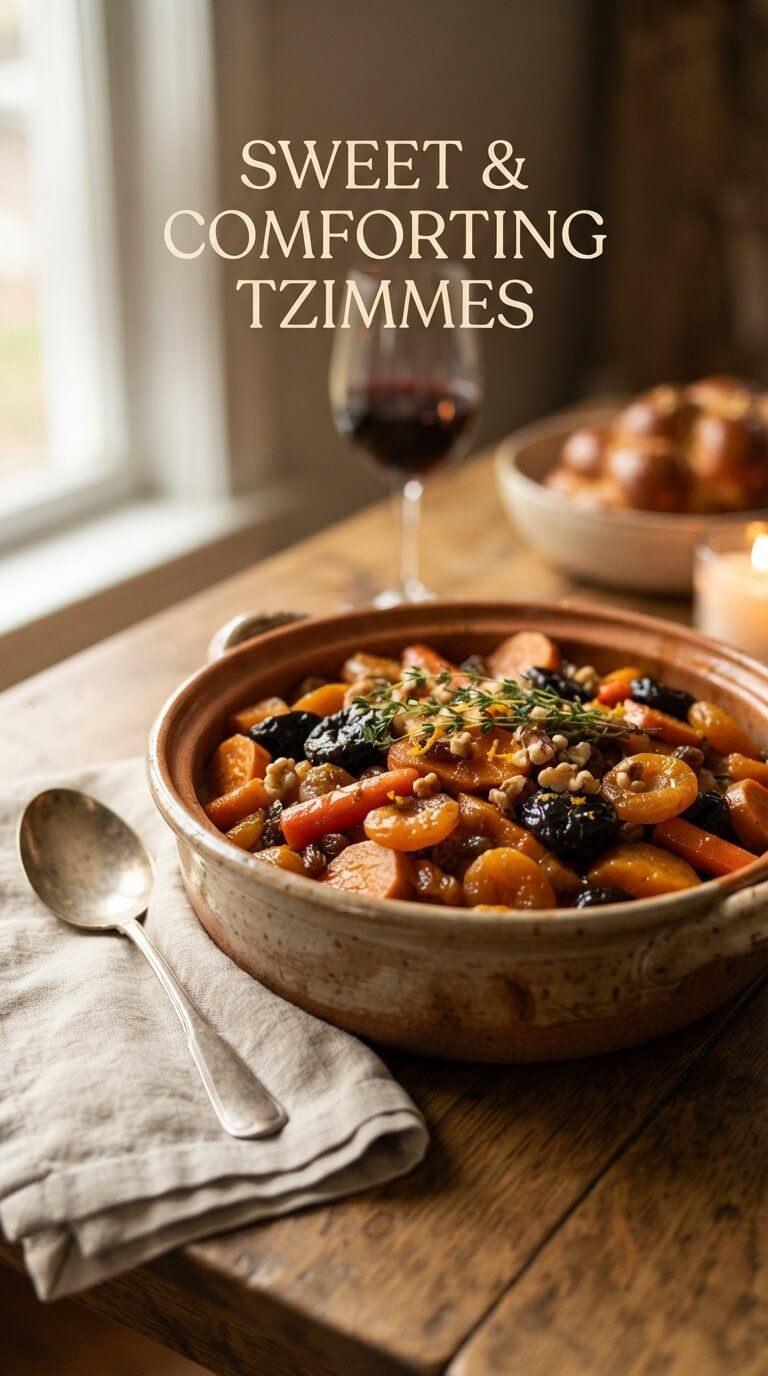
A simple version can include:
- Carrots
- Sweet potatoes
- Dried apricots
- Prunes
- Honey
- Cinnamon
Cook everything slowly until the vegetables become tender and caramelised.
Tzimmes is frequently associated with Rosh Hashanah because sweet foods are traditionally enjoyed as a symbol of hopes for a sweet year.
7. Honey Roasted Sweet Potatoes
Sweet potatoes are naturally sweet, making them an easy addition to a festive holiday menu.
Cut them into cubes, coat with olive oil and honey, then roast until caramelised.
For extra flavour, try cinnamon, thyme or a small amount of orange zest.
8. Rosh Hashanah Brisket
Brisket is a popular choice for a traditional Rosh Hashanah dinner, especially for families looking for a hearty main course.
A slow-cooked brisket can be prepared with:
- Onions
- Garlic
- Stock
- Honey
- Pomegranate juice
- Dried fruit
- Herbs
Cook it slowly until tender, then slice it against the grain.
9. Pomegranate Brisket
For a more modern holiday main course, combine brisket with pomegranate.
A sauce made with pomegranate juice, stock, onions and a little sweetness creates a rich, glossy finish.
The deep colour also makes this dish particularly attractive for a festive table.
10. Honey Garlic Chicken
Not every family wants to make brisket.
Honey garlic chicken is a simpler option that works particularly well for a smaller Rosh Hashanah dinner.
Bake chicken thighs with:
- Honey
- Garlic
- Lemon
- Olive oil
- Paprika
- Fresh herbs
The result is savoury, sweet and easy to prepare.
11. Pomegranate Glazed Chicken
Pomegranate juice can also be turned into a glaze for roasted chicken.
Reduce the juice with honey, garlic and a little lemon until slightly thickened. Brush it over the chicken during the final stage of roasting.
Serve with roasted vegetables or rice.
12. Roast Chicken with Apples
For an autumn-style Rosh Hashanah dinner, roast chicken with apples, onions and herbs.
The apples soften while roasting and create a naturally sweet accompaniment to the savoury chicken.
13. Honey Garlic Salmon
Fish is another possible choice for a festive meal.
A honey garlic salmon fillet can be prepared quickly while still looking elegant enough for a holiday table.
Top it with fresh herbs and pomegranate seeds for a colourful finish.
14. Sephardic-Style Symbolic Foods
Rosh Hashanah food traditions are not limited to apples and honey.
In Sephardic and Mizrahi traditions, families may prepare a series of symbolic foods known as simanim. These can include dates, beans, leeks, beets, squash, pomegranate and a fish head, with the foods connected to blessings and wordplay.
This is an important reason why searching for traditional Rosh Hashanah recipes can produce very different menus.
15. Sweet and Sour Leeks
Leeks can be prepared as a symbolic side dish.
Cook sliced leeks slowly with olive oil and create a sweet-and-sour flavour using ingredients such as honey, lemon or pomegranate.
Keep the seasoning balanced rather than overly sweet.
16. Roasted Beets with Pomegranate
Roasted beetroot and pomegranate make a beautiful side dish.
Roast beetroot until tender, then top with:
- Pomegranate seeds
- Fresh herbs
- Toasted walnuts
- A light dressing
It is colourful enough for a holiday table and can be prepared ahead.
17. Green Beans with Honey Tahini
For a lighter vegetable side, serve roasted or steamed green beans with a honey-tahini dressing.
Add sesame seeds and pomegranate seeds just before serving.
This combination works particularly well alongside rich brisket.
18. Jewish Apple Kugel
Apple kugel is a comforting option when you want something between a side dish and a sweet course.
Use apples, noodles, eggs, cinnamon and a lightly sweetened mixture.
It can be prepared ahead, making it useful for a busy holiday meal.
19. Potato Kugel
Potato kugel provides a savoury contrast to the sweeter foods on the table.
Serve it alongside brisket, chicken or roasted vegetables.
For a crisp top, bake it in a shallow dish rather than a very deep one.
20. Jeweled Rice with Dried Fruit
Rice becomes a beautiful holiday side when combined with dried fruit, herbs and nuts.
Try:
- Basmati rice
- Raisins
- Dried cranberries
- Toasted almonds
- Fresh parsley
- A pinch of cinnamon
The result is colourful, fragrant and easy to serve family-style.
21. Couscous with Seven Vegetables
A vegetable-filled couscous can make an excellent Sephardic-inspired addition to the menu.
Use seasonal vegetables such as carrots, squash, courgette, chickpeas and onions.
It is particularly useful when you are feeding a larger group.
22. Roasted Autumn Vegetables
Keep things simple with a large roasting tray of seasonal vegetables.
Combine:
- Carrots
- Butternut squash
- Sweet potatoes
- Onions
- Parsnips
Add olive oil, herbs and a small drizzle of honey before roasting.
23. Honey Apple Cake
Apple cake is one of the easiest desserts for a Rosh Hashanah celebration.
Combine chopped apples with cinnamon and a honey-sweetened cake batter.
Bake until golden and serve warm or at room temperature.
24. Traditional Honey Cake
Honey cake, also known as lekach, is a classic Rosh Hashanah dessert. Traditional recipe collections commonly include honey cake among the holiday sweets.
For a more modern version, add:
- Orange zest
- Cinnamon
- Ginger
- Cardamom
- Chopped walnuts
Serve it with tea or coffee after dinner.
25. Honey Apple Upside-Down Cake
For an impressive dessert, arrange thin apple slices in the bottom of a cake tin and cover them with honey-scented batter.
When inverted, the apples create a glossy topping.
It looks complicated but is surprisingly straightforward.
26. Apple Honey Pie
Apple pie becomes perfect for Rosh Hashanah when honey replaces some of the traditional sugar.
Add cinnamon and a little lemon juice to keep the flavour bright.
Serve warm with a simple dairy or non-dairy accompaniment according to your meal tradition.
27. Pomegranate Cake
Pomegranate can be incorporated into a festive cake through juice, seeds or both.
Decorate the top with fresh pomegranate seeds immediately before serving.
The jewel-like topping creates an especially Pinterest-friendly dessert.
28. Honey Walnut Cookies
Small honey cookies are ideal if you want a dessert that guests can enjoy without sitting down for a full slice of cake.
Add chopped walnuts for texture.
They can also be packaged into small gift boxes for hosts or family members.
29. Date and Coconut Bites
Dates are among the symbolic foods associated with Sephardic Rosh Hashanah traditions.
Blend dates with coconut and nuts, then shape the mixture into small balls.
They are naturally sweet and require no complicated baking.
30. Apples-and-Honey Punch
For a non-alcoholic holiday drink, combine apple juice with sparkling water, lemon and honey.
Add apple slices and pomegranate seeds to the serving jug.
This makes an attractive drink for both adults and children.
31. Pomegranate Spritzer
Combine pomegranate juice with sparkling water and fresh citrus.
Serve over ice with pomegranate seeds and mint.
It is refreshing and visually striking without requiring a complicated recipe.
32. Honey Cinnamon Roasted Apples
For an easy dessert, roast apple halves with honey and cinnamon.
Add chopped walnuts or pecans for crunch.
This is especially useful when you want a quick Rosh Hashanah dessert without making a full cake.
33. Apple and Honey Tart
A thin apple tart topped with honey is a beautiful centrepiece dessert.
Arrange the apple slices in overlapping circles for a professional-looking finish.
Brush lightly with honey after baking.
34. Mini Honey Cakes
Instead of one large honey cake, make individual mini cakes.
They are easier to portion and work beautifully for a buffet-style Rosh Hashanah celebration.
Top each one with a few pomegranate seeds or chopped nuts.
35. Rosh Hashanah Dessert Board
If you want an easy option, create a dessert board with:
- Apple slices
- Honey
- Pomegranate
- Dates
- Honey cake
- Cookies
- Nuts
- Dried fruit
This requires very little cooking while still creating a generous-looking dessert spread.
What Are the Traditional Foods for Rosh Hashanah?
Some of the most recognisable Rosh Hashanah foods are:
Apples and Honey
Associated with wishes for a good and sweet year.
Round Challah
A traditional round loaf served during the festive meal, often dipped in honey.
Pomegranate
Used in many traditions as a symbolic food representing hopes for abundant merits.
Tzimmes
A sweet carrot-based dish commonly associated with Ashkenazi Rosh Hashanah meals.
Honey Cake
A classic sweet holiday dessert.
Dates, Leeks, Beets, Squash and Beans
These appear in various Sephardic and Mizrahi simanim traditions, where their names and characteristics are connected with blessings for the coming year.
Easy Rosh Hashanah Menu
If you do not want to spend the entire day cooking, try this simple menu:
Starter
- Apples and honey
- Pomegranate salad
- Round challah
Main
- Honey garlic chicken or brisket
Sides
- Tzimmes
- Roasted vegetables
- Jeweled rice
Dessert
- Honey cake
- Fresh apples and pomegranate
Drink
- Apple and honey punch
This menu gives you the major flavours associated with the holiday without requiring dozens of separate dishes.
Traditional Rosh Hashanah Dinner Menu
For a larger family dinner, use this structure:
First Course
Round challah with honey, apples and honey, pomegranate and a light salad.
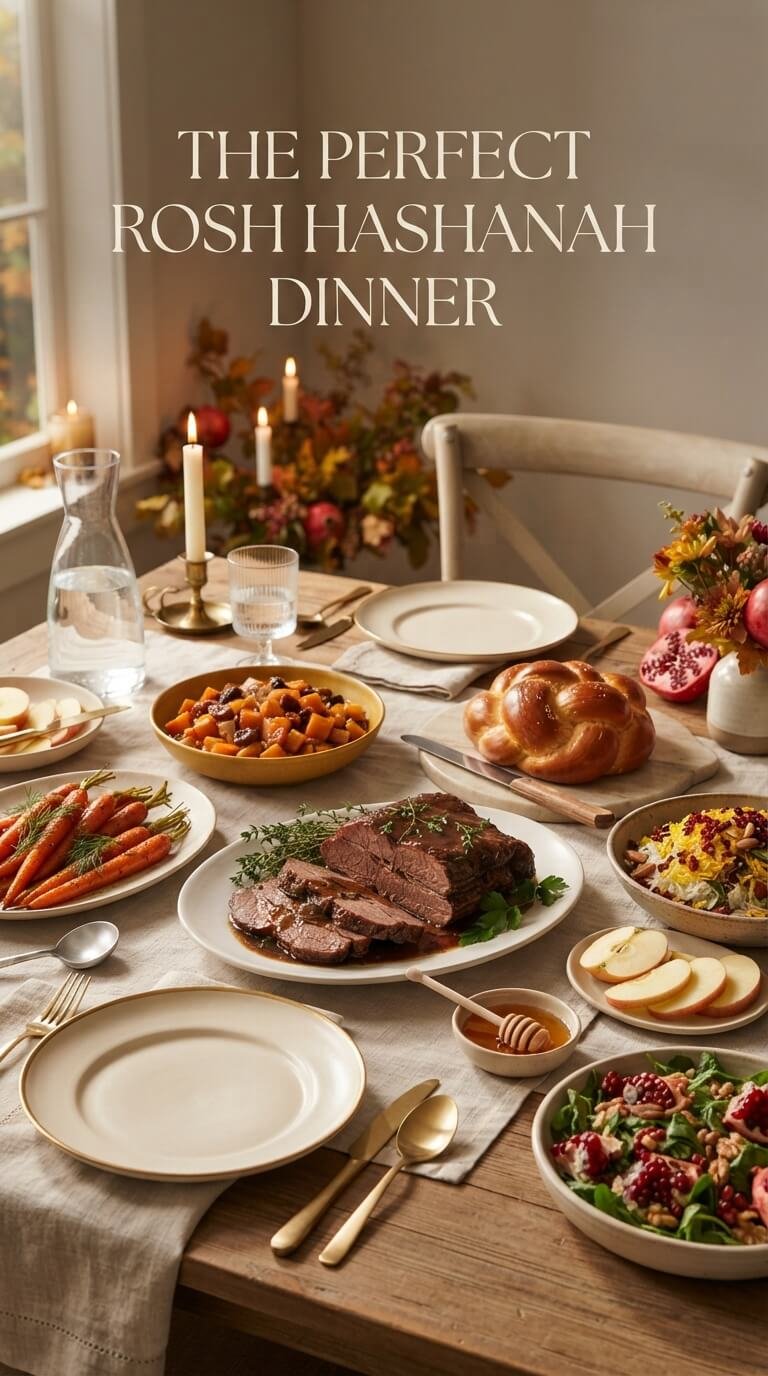
Main Course
Slow-cooked brisket or roasted chicken.
Vegetable Sides
Tzimmes, roasted carrots, green beans and roasted beetroot.
Starch
Potato kugel or jeweled rice.
Dessert
Honey cake, apple cake and fresh fruit.
This creates a balanced table with sweet, savoury, fresh and comforting dishes.
Rosh Hashanah Recipes for a Crowd
When cooking for a large family, choose recipes that can be prepared in advance.
The best options include:
- Brisket
- Tzimmes
- Honey cake
- Apple cake
- Kugel
- Roasted vegetables
- Rice dishes
- Challah dough prepared ahead
- Pomegranate salad components
Avoid choosing too many dishes that must be finished at exactly the same time.
A better strategy is to have one impressive main, two or three sides, one fresh dish and two desserts.
Easy Rosh Hashanah Recipes for Beginners
If you are hosting Rosh Hashanah for the first time, keep the menu manageable.
Start with:
- Round challah
- Apples and honey
- Roast chicken
- Honey-glazed carrots
- Jeweled rice
- Honey cake
- Apple and honey punch
These dishes cover bread, appetisers, main course, sides, dessert and drinks without making the menu unnecessarily complicated.
Make-Ahead Rosh Hashanah Food
Planning ahead can make the holiday much less stressful.
1–2 Days Before
Prepare:
- Honey cake
- Apple cake
- Brisket
- Tzimmes
- Kugel
- Salad dressing
- Dessert components
The Day of the Meal
Prepare:
- Challah
- Fresh salad
- Roasted vegetables
- Rice
- Chicken if using
- Apple and honey platter
Just Before Serving
Add:
- Pomegranate seeds
- Fresh herbs
- Honey
- Nuts
- Fresh fruit
This keeps the table looking fresh without leaving everything until the last minute.
Rosh Hashanah Food Shopping List
Fresh Produce
- Apples
- Pomegranates
- Carrots
- Sweet potatoes
- Beets
- Leeks
- Squash
- Green beans
- Onions
- Garlic
- Lemons
- Fresh herbs
Pantry
- Honey
- Flour
- Sugar
- Cinnamon
- Dried fruit
- Dates
- Raisins
- Rice
- Couscous
- Nuts
- Olive oil
- Stock
Main Course
Choose one:
- Brisket
- Chicken
- Fish
Always adapt ingredients and preparation to your own dietary and kosher practices.
Rosh Hashanah Recipe Ideas by Category
Best Appetisers
- Apples and honey
- Pomegranate salad
- Round challah
- Honey-glazed vegetables
Best Main Dishes
- Brisket
- Pomegranate brisket
- Honey garlic chicken
- Pomegranate chicken
- Roast chicken with apples
- Salmon
Best Side Dishes
- Tzimmes
- Potato kugel
- Apple kugel
- Jeweled rice
- Roasted carrots
- Green beans
- Roasted beetroot
Best Desserts
- Honey cake
- Apple cake
- Apple tart
- Pomegranate cake
- Honey cookies
- Date bites
How to Create a Beautiful Rosh Hashanah Table
Food presentation can make a simple meal feel much more special.
Use a large serving board for apples, honey, dates and pomegranate.
Choose natural autumn colours such as:
- Cream
- Warm brown
- Gold
- Deep red
- Orange
- Green
Place pomegranate seeds over salads and desserts just before serving.
A round challah in the centre of the table also creates a natural focal point.
What Makes Rosh Hashanah Food Special?
The most interesting part of Rosh Hashanah food is that the meal can combine taste, tradition and symbolism.
Sweet foods are particularly prominent because of the wish for a sweet year. Apples and honey are perhaps the best-known example, but many communities have additional symbolic foods and customs.
That means a Rosh Hashanah menu does not need to be complicated to feel meaningful.
A simple plate of apples and honey, round challah and a homemade main course can be just as appropriate as a large multi-course dinner.
Frequently Asked Questions
What are the most popular Rosh Hashanah recipes?
Popular choices include apples and honey, round challah, brisket, roast chicken, tzimmes, kugel, pomegranate dishes and honey cake.
What do you eat on Rosh Hashanah?
Foods vary by family and Jewish tradition, but apples and honey, round challah, pomegranate and other symbolic foods are commonly associated with the holiday. Brisket and chicken are also frequently served at Rosh Hashanah meals.
Why do people eat apples and honey on Rosh Hashanah?
Apples dipped in honey are traditionally eaten with a wish for a good and sweet year.
Why is challah round on Rosh Hashanah?
Round challah is a traditional Rosh Hashanah form. Explanations and interpretations vary, but the shape is often connected with themes such as the cycle of the year.
Is honey cake traditional for Rosh Hashanah?
Yes. Honey cake, or lekach, is a traditional Rosh Hashanah dessert and appears in numerous Jewish holiday recipe collections.
What meat is traditionally served for Rosh Hashanah?
Brisket and chicken are frequently served at Rosh Hashanah meals, although the exact main course varies between families and communities.
What are Rosh Hashanah simanim?
Simanim are symbolic foods eaten in certain Rosh Hashanah traditions. Depending on the community, these can include dates, beans, leeks, beets, squash, pomegranate, apple and honey, and fish or a fish head.
What is an easy Rosh Hashanah dinner?
A simple menu could include round challah, apples and honey, roast chicken, roasted carrots, rice and honey cake.
Can I prepare Rosh Hashanah food ahead of time?
Yes. Brisket, tzimmes, kugel and honey cake are particularly useful make-ahead choices. Fresh salads, fruit and garnishes can be finished shortly before serving.
Final Thoughts
The best Rosh Hashanah recipes are the ones that make the holiday table feel warm, generous and meaningful.
Whether your family prefers a traditional Ashkenazi-style dinner, Sephardic or Mizrahi-inspired symbolic foods, or a modern menu built around apples, honey and seasonal ingredients, there are countless ways to create a beautiful celebration.
Start with the essentials — round challah, apples and honey, a comforting main dish, seasonal sides and honey cake — and then add the foods that are meaningful to your own family.
The goal is not to make the biggest menu. It is to create a meal that people remember.