Cozy Living Room Ideas: 18 Easy Ways to Create a Warm, Relaxing Space
A cosy living room should feel inviting the moment you walk in — comfortable enough for a quiet cup of tea, a film night or a lazy Sunday afternoon. The good news is that you do not need a huge room or an expensive makeover to achieve that feeling.
These cozy living room ideas focus on practical changes that work in real British and Irish homes, from layered lighting and soft textiles to warm colours, clever furniture placement and small-space storage. Whether your lounge is compact, rented, traditional or modern, you can mix a few of these ideas to create a room that feels warmer and more personal without becoming cluttered.
1. Layer Your Living Room Lighting
One ceiling light rarely creates a cosy atmosphere on its own. A better approach is to combine several smaller sources of light around the room.
The only woodworking guide built for small spaces and complete beginners. Master 3 real projects using just 5 affordable hand tools even if you live in a studio apartment.


Use a table lamp beside the sofa, a floor lamp in an empty corner and a smaller lamp on a sideboard or shelving unit. Warm-white bulbs can make the room feel softer and more inviting in the evening.
Why it works: Different levels of lighting create depth and allow you to change the mood depending on what you are doing.
How to recreate it: Start with one lamp beside the main seating area, then add another light near a darker corner.
Styling tip: Choose lamps with fabric, ceramic or frosted shades rather than overly bright exposed bulbs.
Budget alternative: A simple second-hand table lamp with a new shade can make a surprisingly big difference.
2. Choose Warm, Soft Neutrals for the Walls
Cream, warm beige, mushroom, taupe and gentle greige can create a calm backdrop without making a living room feel flat.
Instead of choosing a stark white, look for a neutral with warm undertones that works with your flooring and furniture.
Why it works: Warm neutrals visually soften hard surfaces and provide an easy base for textured furnishings.
How to recreate it: Test paint samples on different walls because natural and artificial light can change how a colour looks throughout the day.
Styling tip: Carry the same warm undertone into cushions, curtains or artwork for a more cohesive room.
Budget alternative: If repainting is not practical, introduce warm tones through removable textiles and accessories.
3. Fill the Sofa With Comfortable Textures
A sofa can instantly look more inviting when it has a considered combination of cushions and throws.
Try two or three cushion sizes rather than covering every inch of the sofa. Add one knitted, brushed or woven throw over an arm or corner.
Why it works: Texture gives the room visual softness without requiring major furniture changes.
How to recreate it: Combine one larger plain cushion, one patterned cushion and a tactile smaller cushion.
Styling tip: Mix materials such as cotton, boucle-style fabric, wool-look knits and linen rather than buying everything in exactly the same fabric.
Budget alternative: Shop your own home first. A spare blanket or cushion from another room may work perfectly.
4. Add a Large Rug to Anchor the Seating Area
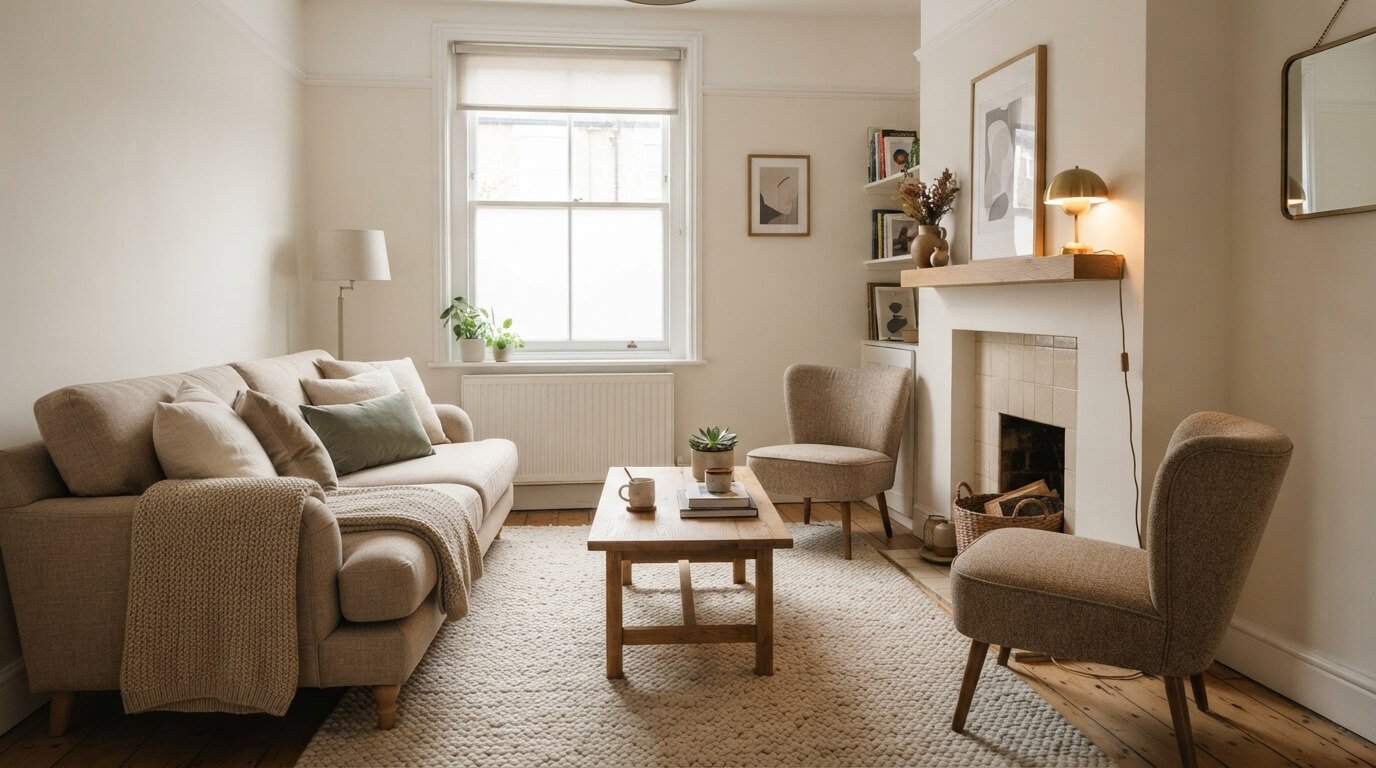


A well-sized rug can make a living room feel considerably more comfortable because it visually connects the sofa, chairs and coffee table.
The only woodworking guide built for small spaces and complete beginners. Master 3 real projects using just 5 affordable hand tools even if you live in a studio apartment.
For a small lounge, avoid choosing a rug that is so tiny it appears to float in the middle of the floor. Ideally, at least the front legs of the main seating should sit on it.
Why it works: The rug defines the relaxing zone and introduces softness underfoot.
How to recreate it: Measure the seating arrangement first, then choose the largest practical size that leaves enough circulation space.
Styling tip: A subtle stripe, faded pattern or low-contrast design can add interest without overwhelming a small room.
Budget alternative: Look for washable rugs, flatweave designs or second-hand options.
5. Create a Cosy Reading Corner
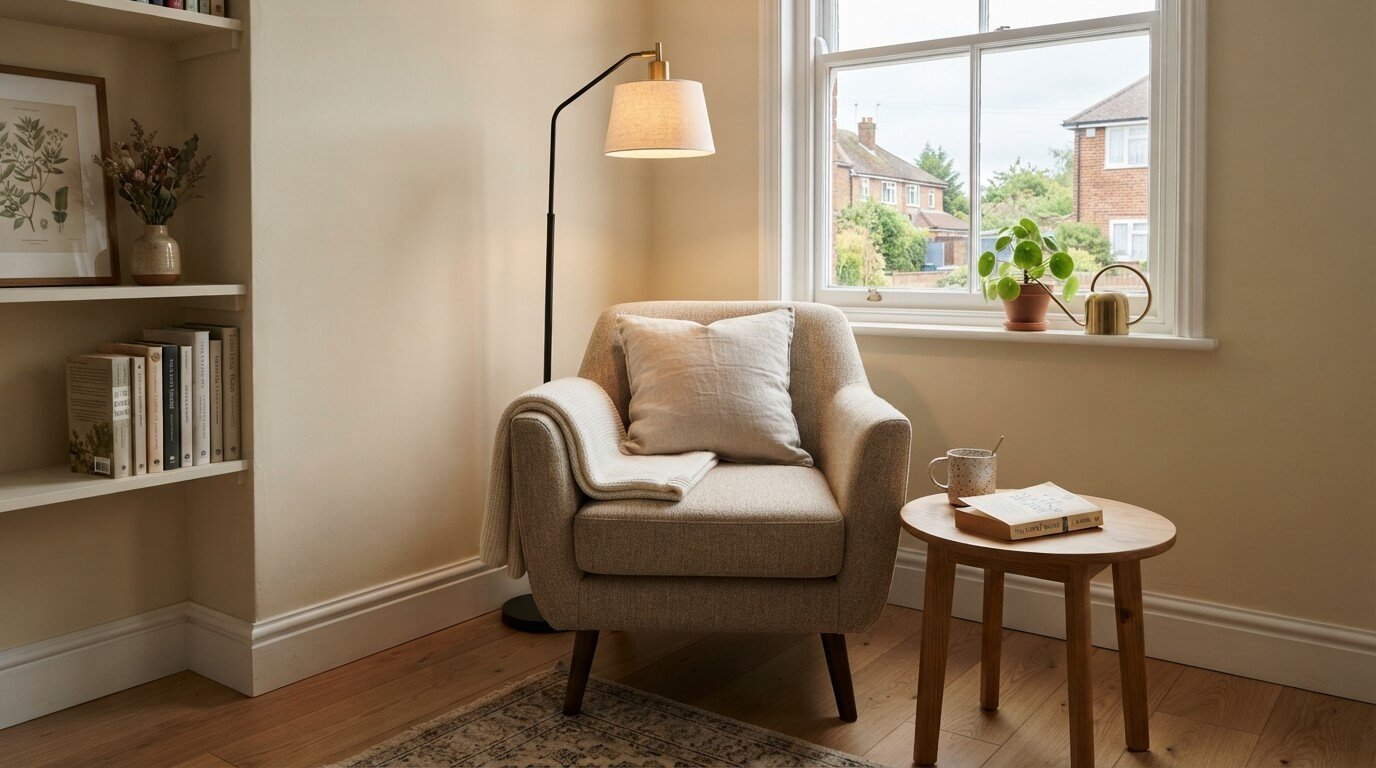
An unused corner can become one of the most appealing parts of your living room with just three elements: a comfortable chair, a small table and focused lighting.
You do not need a dedicated reading room. Even a narrow corner beside a window or bookcase can work.
Why it works: Creating a specific purpose for an awkward area makes the room feel more thoughtfully designed.
How to recreate it: Position a compact armchair near a floor lamp and add a small round side table for a mug or book.
Styling tip: Add a small cushion and throw in colours already used elsewhere in the room.
Budget alternative: Repurpose an existing dining chair and pair it with a second-hand side table.
6. Use Curtains to Make the Room Feel Softer
Curtains are often treated as purely practical, but they can make a major contribution to the atmosphere of a living room.
Full-length curtains in linen-look, cotton or velvet-style fabrics can soften windows and introduce another layer of texture.
Why it works: Soft window treatments reduce the visual hardness of glass, frames and walls.
How to recreate it: Hang curtains as close to the ceiling as practical and allow them to fall towards the floor.
Styling tip: For a calm look, choose curtains close in tone to the wall rather than using a high-contrast colour.
Budget alternative: Simple ready-made curtains can work beautifully when correctly measured and hung.
7. Introduce Natural Wood
Wooden furniture and accessories can prevent a neutral living room from feeling cold.
Think oak-toned coffee tables, wooden shelving, a stool, picture frames or a small side table.
Why it works: Natural-looking wood adds warmth and variation to rooms dominated by painted walls and upholstery.
How to recreate it: Choose one or two wood tones and repeat them rather than mixing lots of competing finishes.
Styling tip: Pair wood with soft fabrics and warm lighting for a balanced combination.
Budget alternative: Sand and refresh an existing wooden stool or side table instead of buying new furniture.
8. Make the Fireplace or TV Wall the Cosy Focal Point
If your room already has a fireplace, make it the visual heart of the space. If the television is the main focal point, soften the surrounding area rather than adding lots of decoration.
A simple mantel display might include a mirror, framed artwork, a candle and one small vase.
Why it works: A clear focal point makes furniture placement easier and gives the room a sense of purpose.
How to recreate it: Keep the arrangement relatively low and avoid filling every available surface.
Styling tip: Repeat colours from your sofa cushions or rug so the focal point feels connected to the rest of the room.
Budget alternative: Rearrange artwork and accessories you already own.
9. Add a Small Coffee Table With Rounded Edges
In a compact living room, a large rectangular coffee table can make circulation feel awkward. A smaller round or oval table may be easier to move around.


Why it works: Curved edges can make a compact layout feel less visually heavy and easier to navigate.
How to recreate it: Leave enough space between the sofa and table for comfortable movement.
Styling tip: Keep the tabletop simple — perhaps a small tray, candle and one decorative object.
Budget alternative: A compact wooden side table can double as a coffee table in a very small room.
10. Bring in Houseplants for a Lived-In Feel
A few well-positioned plants can make a living room feel more relaxed and natural.
Choose plants based on the available light rather than buying purely for appearance.
Why it works: Greenery adds colour, shape and a sense of life to otherwise neutral interiors.
How to recreate it: Try one taller plant beside the sofa and one smaller plant on a shelf or side table.
Styling tip: Use simple ceramic, terracotta or woven-style pots that complement the rest of the room.
Budget alternative: Propagate plants you already have or use a single inexpensive plant as the focal point.
11. Display Books and Personal Objects
A cosy room should not look like a showroom. Books, photographs, travel finds and objects with personal meaning help give the space character.
Why it works: Personal details make a room feel lived-in rather than overly styled.
How to recreate it: Group books horizontally and vertically on a shelf, then leave some breathing room around them.
Styling tip: Display only your favourites instead of trying to show everything you own.
Budget alternative: No purchase is necessary — rearranging your existing collection can completely change a shelf.
12. Try a Soft, Tonal Colour Palette
Instead of matching everything exactly, choose several closely related shades.
For example, combine warm cream walls with oatmeal upholstery, beige cushions, muted brown wood and soft olive accents.
Why it works: Tonal decorating creates visual harmony while still allowing different textures to stand out.
How to recreate it: Pick one main neutral, one darker grounding shade and one subtle accent colour.
Styling tip: Use your darkest tone in small doses — perhaps through a lamp base, frame or cushion.
Budget alternative: Change only cushions, throws and small accessories rather than replacing furniture.
13. Use Wall Art to Add Warmth and Personality
Large blank walls can make a room feel unfinished. Artwork gives the eye something to rest on and can introduce colour without changing the furniture.


Why it works: Artwork adds personality and helps connect different colours in the room.
How to recreate it: Try one oversized print above the sofa or create a small gallery wall using frames in a consistent finish.
Styling tip: Pick artwork that contains at least one colour already present in the room.
Budget alternative: Frame postcards, pages from old books or affordable prints.
14. Add Hidden Storage for Everyday Clutter
Cosiness disappears quickly when blankets, cables, toys and remote controls are scattered everywhere.
Use baskets, storage ottomans and furniture with drawers to keep everyday items close but out of sight.
Why it works: A tidy room is easier to relax in without needing to look completely minimalist.
How to recreate it: Give frequently used objects a dedicated home near where they are used.
Styling tip: Choose storage baskets that match your room rather than hiding them away completely.
Budget alternative: Reuse sturdy boxes inside cupboards or cover inexpensive storage boxes with fabric.
15. Position Furniture for Conversation
A cosy living room is not only about appearance. Furniture should make it easy for people to sit comfortably and talk.
Instead of pushing every piece against the walls, consider bringing the seating slightly towards the centre when the room allows.
Why it works: A defined seating arrangement feels more intimate and purposeful.
How to recreate it: Position the sofa opposite or at an angle to a chair, keeping clear pathways around the arrangement.
Styling tip: Place a small table within easy reach of each main seat.
Budget alternative: Simply rearrange your existing furniture before buying anything.
16. Use Mirrors Carefully in Small Living Rooms
A mirror can be particularly useful when a living room feels dark or cramped.
Place one opposite or near a window where it can reflect available daylight or an attractive part of the room.
Why it works: The reflection can make the room feel visually more open.
How to recreate it: Test the position before drilling, because reflecting a doorway, clutter or an unattractive wall will not improve the room.
Styling tip: A simple aged-brass, wooden or painted frame can reinforce the room’s decorating style.
Budget alternative: Search charity shops and second-hand marketplaces for mirrors that can be refreshed with paint.
17. Make the Ceiling Part of the Cosy Scheme
The ceiling is easy to overlook, but its colour and lighting affect how the whole room feels.
In a smaller room, a soft warm-white ceiling can keep the space feeling open. In a larger room, a slightly deeper ceiling colour can create a more enveloping atmosphere.
Why it works: The ceiling contributes to the overall balance of light and colour.
How to recreate it: Consider the amount of natural light before choosing a darker ceiling shade.
Styling tip: Coordinate the ceiling with the wall undertones rather than treating it as a completely separate colour.
Budget alternative: Keep the ceiling as it is and focus your budget on lamps and textiles.
18. Finish With One or Two Scent and Comfort Details
The final layer of a cosy living room does not need to be decorative clutter.
A candle, diffuser, soft throw, favourite book or small tray can provide the finishing touch.
Why it works: Small functional details reinforce the room’s purpose as a place to relax.
How to recreate it: Choose only a few items that you will genuinely use.
Styling tip: Keep surfaces relatively clear so the room still feels calm rather than crowded.
Budget alternative: Use a favourite mug, blanket or book you already own instead of buying new accessories.
Best Cozy Living Room Ideas for Small Spaces
If your living room is compact, focus on comfort without visual bulk.
The most useful choices are:
- A round or oval coffee table
- Wall-mounted or narrow shelving
- One large rug rather than several small rugs
- Furniture with visible legs
- Baskets for quick clutter control
- A mirror positioned to reflect natural light
- Warm lamps instead of relying only on ceiling lighting
- A restrained cushion and accessory collection
- Furniture that serves more than one purpose
The key is not to remove everything. A cosy small living room should still have texture and personality; it simply needs better editing.
Budget-Friendly Cozy Living Room Ideas
You can create a warmer lounge without replacing your sofa or repainting the entire room.
Start with the changes that give the biggest visual difference:
- Rearrange the furniture.
- Add warm, layered lighting.
- Introduce a soft throw.
- Change or rearrange cushions.
- Add one large or appropriately sized rug.
- Rearrange artwork and shelves.
- Bring in one or two plants.
- Add baskets to control visible clutter.
A useful rule: Before buying anything, spend an afternoon removing unnecessary items and trying a new furniture layout. You may discover that the room needs editing rather than more decoration.
Quick Guide: Which Cozy Living Room Idea Should You Try?
| If your room feels… | Try this first |
|---|---|
| Cold or stark | Warm lighting + soft textiles |
| Cluttered | Hidden storage + fewer accessories |
| Small | Round furniture + visual breathing space |
| Dark | Carefully positioned mirror + layered lamps |
| Empty | Large rug + artwork + plants |
| Bland | Tonal colour + natural wood + texture |
| Awkwardly arranged | Reposition seating around a clear focal point |
| Unfinished | Curtains + artwork + a few personal objects |
Common Mistakes to Avoid
Using only one overhead light: This can make an otherwise attractive room feel harsh at night.
Buying too many cushions: Comfort does not require filling every seat with accessories.
Choosing a tiny rug: A very small rug can make the seating area look disconnected.
Overmatching everything: A room becomes more interesting when textures and finishes vary slightly.
Ignoring storage: Visible everyday clutter can quickly undo a carefully styled room.
Pushing every piece of furniture against the wall: This is not always the best use of the available space.
Adding too many decorative objects: Cosy does not have to mean crowded.
FAQ
How can I make my living room cosy without spending much money?
Start with furniture placement, lighting and textiles. Rearranging your sofa, adding a warm lamp, using a throw and displaying existing books or artwork can change the atmosphere without a major purchase.
What colours make a living room feel cosy?
Warm neutrals such as cream, beige, taupe and mushroom work well. Deeper shades such as olive, warm brown, rust or muted burgundy can be added as accents.
How do I make a small living room feel cosy but not cluttered?
Choose fewer, more useful pieces. Prioritise comfortable seating, one appropriately sized rug, layered lighting and hidden storage.
What type of lighting is best for a cosy living room?
A combination of table lamps, floor lamps and other low-level lighting usually creates a softer atmosphere than a single bright ceiling fixture.
How many cushions should I put on a sofa?
There is no fixed number, but a small sofa often looks comfortable with around three to five cushions in different sizes and textures.
Should a cosy living room have a rug?
A rug is not essential, but it can help define the seating area and add warmth and softness. Choose a size that works with the furniture rather than simply choosing the smallest option available.
How can I make a rented living room feel cosier?
Focus on removable changes such as lamps, cushions, throws, rugs, plants, freestanding storage and artwork that can be removed without altering the property.
Conclusion
The best cozy living room ideas are usually simple rather than expensive. Start by improving the lighting, then add tactile fabrics, a well-sized rug, warm colours and a few personal details. If space is limited, choose furniture carefully and control clutter with practical storage.
You do not need to copy one Pinterest-perfect room. Pick the two or three ideas that solve your biggest problem, then build from there. The result should feel comfortable, useful and genuinely like home.