
Weight Loss Calculator Estimate Your Daily Calories and Fat Loss Timeline
Losing weight is easier when you understand how your body uses energy. A weight loss calculator helps estimate how many calories your body needs each day and how much you should reduce to lose fat safely.
Whether you want to lose a few kilograms or plan a long-term transformation, using a calorie calculator or calorie deficit calculator can help you create a realistic strategy. These tools estimate your daily calorie intake, fat-loss timeline, and the number of calories required to reach your goal weight.
Instead of guessing how many calories you should eat, a daily calorie needs calculator uses personal details such as age, weight, height, and activity level to generate personalized results. This helps you determine your calorie intake for weight loss and avoid extreme dieting that could slow your metabolism.
In this guide, you will learn how a weight loss planner works, how many calories you need to lose weight, and how long it may take to reach your goals.
Free Weight Loss Calculator
A weight loss calculator is a simple tool that estimates how many calories you should eat each day to lose weight. By entering a few personal details, the calculator can determine your daily calorie target, fat loss rate, and estimated timeline for reaching your goal.
Most modern calculators function as both a calorie intake calculator and a fat loss calculator, helping users understand the relationship between calorie consumption and weight change.
Information Required
To calculate accurate results, the tool usually asks for the following inputs:
Age
Gender
Height
Current weight
Target weight
Activity level
These inputs help estimate your metabolism and overall energy expenditure.
Results You Will Receive
After entering your information, the weight management calculator will typically provide:
Estimated daily calorie needs
Recommended calorie deficit for weight loss
Weekly fat-loss rate
Estimated time to reach your target weight
The calculations are based on the scientific principle of energy balance.
Calorie Deficit
A calorie deficit occurs when you burn more calories than you consume. Over time, this causes your body to use stored fat for energy, resulting in weight loss.
Weight Loss Calculator
Daily Calorie Target: –
Estimated Weeks to Target: –
How the Weight Loss Calculator Works
A weight loss calculator combines several metabolic calculations to estimate how many calories your body burns each day. These calculations help determine your calorie needs for weight loss, maintenance, or weight gain.
Most calculators analyze three key factors: your metabolism, activity level, and calorie intake.
Energy Balance and Fat Loss
Weight loss happens when the calories you consume are lower than the calories your body burns. This concept is known as energy balance.
If your daily calorie intake is higher than your calorie expenditure, your body stores the extra energy as fat. On the other hand, if you maintain a daily calorie deficit, your body begins using stored fat for energy.
A calorie deficit calculator estimates the difference between calories consumed and calories burned to determine how quickly you can lose weight.
How Calorie Deficits Lead to Weight Loss
When you reduce your calorie intake by about 500 calories per day, you can typically lose around 0.5 kg per week. Increasing the deficit can lead to faster results, but extremely low calorie intake may slow metabolism.
Using a daily calories calculator ensures your diet remains balanced while maintaining a healthy deficit.
How Activity Level Changes Your Results
Physical activity plays a major role in weight loss calculations. Exercise increases your calorie expenditure, allowing you to burn more calories throughout the day.
Activity levels are usually categorized as:
Sedentary
Lightly active
Moderately active
Very active
A metabolism calculator combines this activity factor with your metabolic rate to determine your total daily energy expenditure.
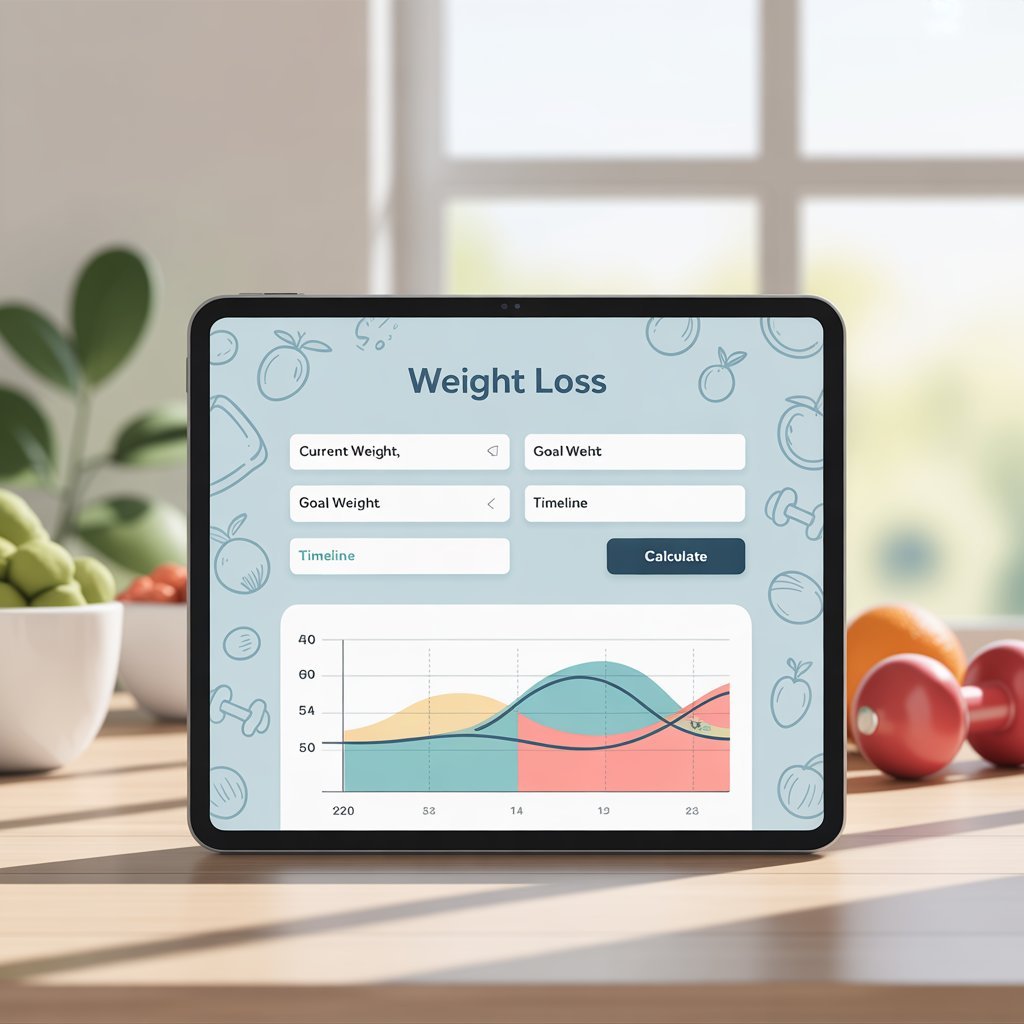
How to Calculate Weight Loss Manually
Although using a weight loss calculator is easier, understanding the formula behind the calculations can help you plan your weight-loss journey more effectively.
The Basic Weight Loss Formula
Weight loss is based on the relationship between calorie intake and calorie expenditure. If you consume fewer calories than your body burns, you will lose weight over time.
Two key calculations determine how many calories you need each day.
Basal Metabolic Rate
BMR represents the number of calories your body burns while at rest.
Total Daily Energy Expenditure
TDEE includes calories burned from daily activities, exercise, and digestion.
Your calorie intake for weight loss is usually calculated by subtracting a deficit from your TDEE.
Calories Required to Lose 1 kg
One kilogram of body fat stores approximately 7,700 calories. This means that creating a calorie deficit of 7,700 calories should theoretically lead to losing 1 kg of body weight.
For example:
500 calorie deficit per day = about 0.5 kg loss per week
1,000 calorie deficit per day = about 1 kg loss per week
These estimates are commonly used by fat loss calculators and weight loss planners.
How Many Calories Do You Need to Lose 1 kg?
Many people searching for a weight loss calculator want to know exactly how many calories they need to burn to lose one kilogram.
Since 1 kg of fat contains roughly 7,700 calories, you need to create a calorie deficit of that amount over time.
For example:
300 calorie deficit daily = slower but steady fat loss
500 calorie deficit daily = balanced and sustainable approach
1,000 calorie deficit daily = faster weight loss
However, extremely large deficits may reduce muscle mass and slow metabolism. This is why most calorie deficit calculators recommend moderate calorie reductions.
Your ideal deficit depends on factors such as:
body weight
metabolism
activity level
diet quality
Using a daily calorie needs calculator ensures you choose a deficit that supports healthy fat loss.
Safe and Realistic Weight Loss Rates
While rapid weight loss may seem appealing, sustainable fat loss requires a balanced approach.
Health experts, including the
Centers for Disease Control and Prevention,
recommend losing about 0.5 to 1 kilogram per week.
This rate allows your body to adjust while preserving muscle mass and metabolic health.
Why Slow Weight Loss Is Better
Gradual weight loss offers several benefits:
preserves lean muscle
reduces metabolic slowdown
improves long-term weight maintenance
A healthy weight loss calculator typically recommends moderate calorie deficits to achieve steady results.
Weight Loss Timeline: How Long Will It Take?
A weight loss timeline calculator estimates how long it may take to reach your goal weight based on your daily calorie deficit.
Losing 5 kg
If you maintain a deficit of 500 calories per day, losing 5 kg may take approximately 10 weeks.
Losing 10 kg
At the same deficit, losing 10 kg could take about 20 weeks.
Losing 20 kg
For larger goals, the timeline increases. Losing 20 kg may take 6–10 months depending on diet consistency and physical activity.
A weight loss predictor helps you estimate realistic timelines so you can plan your journey step by step.
Can You Lose 5 kg in 1 Month?
Many people search for ways to lose 5 kg in one month. While it is possible in some cases, it often requires a large calorie deficit and strict exercise routine.
To lose 5 kg in 30 days, you would need a total deficit of about 38,500 calories.
This means:
1,200 to 1,300 calorie deficit daily
Such aggressive dieting may not be sustainable for most people. Instead, using a weight loss planner can help you create a safer and more realistic schedule.
What Is the 3-3-3 Rule for Weight Loss?
The 3-3-3 rule for weight loss is a simple framework designed to encourage consistency in healthy habits.
The rule generally includes:
eating three balanced meals per day
exercising three times per week
maintaining the routine for three weeks or longer
While it is not a scientific formula like a calorie deficit calculator, it helps people build sustainable lifestyle habits that support long-term weight management.
Best Foods That Help Burn Fat
Although no food directly burns fat, certain foods can support metabolism and improve satiety while maintaining a calorie deficit.
High Protein Foods
Protein increases fullness and helps preserve muscle during weight loss.
Examples include:
eggs
chicken
fish
Greek yogurt
High Fiber Foods
Fiber slows digestion and reduces hunger.
Examples include:
vegetables
fruits
oats
whole grains
Thermogenic Foods
Some foods slightly increase calorie burning.
Examples include:
chili peppers
green tea
coffee
Including these foods in a calorie deficit diet plan can help support your weight loss goals.
Factors That Affect Weight Loss
Weight loss does not depend only on calories. Several biological and lifestyle factors can influence results.
Metabolism
Your metabolic rate determines how quickly your body burns calories.
Age
Metabolism tends to slow with age, making weight loss slightly more difficult.
Hormones
Hormonal changes can affect appetite, fat storage, and metabolism.
Sleep
Poor sleep may increase hunger hormones and reduce fat loss.
Physical Activity
Regular exercise increases calorie expenditure and supports fat loss.
A metabolism calculator can help estimate how these factors influence your calorie needs.
Weight Loss Mistakes That Slow Progress
Many people struggle with fat loss because of common mistakes.
Examples include:
eating too few calories
skipping protein
ignoring strength training
inconsistent dieting
Using a weight management calculator helps ensure you follow a balanced approach rather than extreme dieting methods.
Advanced Weight Loss Planning
For individuals seeking more structured strategies, advanced planning techniques can improve results.
Macro Tracking
Tracking protein, carbohydrates, and fats ensures balanced nutrition.
Calorie Cycling
Adjusting calorie intake throughout the week may prevent metabolic slowdown.
Refeed Days
Occasional higher-calorie days may help restore energy levels during long dieting phases.
Combining these strategies with a calorie intake calculator can help optimize long-term fat loss.
Weight Loss Plateau: Why Your Progress Stops
One of the most common frustrations during a weight-loss journey is reaching a weight loss plateau. This happens when your body stops losing weight even though you are still following the same diet and exercise routine.
A plateau occurs because your metabolism gradually adapts to lower calorie intake. As you lose weight, your body requires fewer calories to maintain its new weight. This reduces the effectiveness of the original calorie deficit for weight loss.
Common Causes of a Weight Loss Plateau
Several factors can slow or stop fat loss progress:
Metabolic Adaptation
As body weight decreases, your metabolism slows down slightly. This means the daily calorie intake that once caused weight loss may now only maintain your weight.
Loss of Muscle Mass
If your diet lacks protein or strength training, your body may lose muscle along with fat. Muscle burns more calories than fat, so losing muscle can reduce your metabolic rate.
Hidden Calories
Sometimes small dietary changes, such as larger portion sizes or added snacks, increase your calorie intake without you realizing it.
Reduced Physical Activity
As people lose weight, they may unintentionally move less throughout the day, which reduces their calorie expenditure.
How to Break a Weight Loss Plateau
If progress slows down, you can restart fat loss by making small adjustments.
Strategies include:
recalculating your needs with a weight loss calculator
increasing physical activity
adding strength training
adjusting your calorie deficit diet plan
Using a weight management calculator periodically helps ensure your calorie targets remain accurate as your body changes.
Tracking Your Weight Loss Progress
Many people rely only on the scale to measure progress. However, effective weight management requires tracking multiple indicators.
A weight loss planner works best when combined with consistent progress tracking.
Body Weight Tracking
Weighing yourself regularly can show long-term trends. Daily fluctuations are normal, so it is best to focus on weekly averages rather than single measurements.
Body Measurements
Tracking body measurements can reveal fat loss even when the scale changes slowly.
Common areas to measure include:
waist
hips
chest
thighs
These measurements help track body composition changes that a fat loss calculator cannot fully show.
Body Fat Percentage
Another effective way to track progress is by measuring body fat percentage. Losing fat while maintaining muscle often leads to a healthier body composition even if weight loss is gradual.
Progress Photos
Progress photos provide visual evidence of changes over time. They are particularly helpful when the scale remains stable but your body shape improves.
Combining these methods with a daily calorie needs calculator helps you evaluate whether your current calorie intake supports your goals.
Weight Loss Calculator vs Calorie Calculator
Many people use the terms weight loss calculator and calorie calculator interchangeably, but these tools serve slightly different purposes.
Understanding the difference helps you choose the right tool for your goals.
Weight Loss Calculator
A weight loss calculator focuses on predicting how body weight will change over time.
It typically provides:
estimated fat loss timeline
daily calorie targets
expected weekly weight change
This type of tool functions as a weight loss predictor and a weight management calculator.
Calorie Calculator
A calorie calculator focuses primarily on estimating your daily calorie needs.
It calculates how many calories your body requires to:
maintain weight
lose weight
gain weight
This type of tool often includes calculations related to metabolism and activity level.
Which Tool Should You Use?
For most people, combining both tools provides the best results.
A calorie intake calculator determines your daily calorie target, while a weight loss calculator estimates how quickly you can reach your goal weight.
Together, they create a complete weight loss planning system that supports sustainable fat loss.
How Exercise Affects Weight Loss
Diet plays a major role in weight loss, but exercise can significantly improve results by increasing the number of calories your body burns.
A weight loss calculator usually estimates calorie needs based on activity level, but regular exercise can increase your daily calorie expenditure beyond those estimates.
Types of Exercise That Support Fat Loss
Different forms of physical activity contribute to weight loss in unique ways.
Cardio Training
Cardiovascular exercises such as walking, jogging, cycling, and swimming increase calorie burn during activity. These workouts are often recommended for individuals starting a fat loss plan.
Strength Training
Strength training helps build muscle, which increases your resting metabolism. More muscle means your body burns more calories even while resting.
High-Intensity Interval Training (HIIT)
HIIT workouts alternate between intense exercise and short recovery periods. These workouts can burn a large number of calories in a short amount of time.
Combining exercise with a calorie deficit calculator helps create a balanced strategy for sustainable weight loss.
How Metabolism Influences Weight Loss
Your metabolism determines how efficiently your body converts food into energy. Understanding metabolism can help you use a daily calorie needs calculator more effectively.
Metabolism is largely influenced by:
genetics
age
body composition
hormone levels
One of the most important components of metabolism is:
Basal Metabolic Rate
BMR represents the number of calories your body burns while performing essential functions such as breathing, circulation, and cell production.
People with higher muscle mass generally have a higher BMR because muscle tissue requires more energy than fat tissue.
This is why many weight management calculators include body weight, height, and activity level when estimating calorie needs.
What Happens If You Eat Too Few Calories?
Many people believe that eating extremely low calories will accelerate weight loss. However, this approach can actually slow progress.
When calorie intake becomes too low, the body may enter a metabolic conservation mode, reducing energy expenditure to protect vital functions.
Possible Effects of Very Low-Calorie Diets
Eating too few calories can cause several problems:
muscle loss
fatigue
nutrient deficiencies
slower metabolism
Instead of extreme dieting, it is usually better to maintain a moderate calorie deficit for weight loss.
A calorie intake calculator can help you determine a safe calorie range that supports fat loss without harming your metabolism.
Beginner Weight Loss Tips for Sustainable Results
For people who are new to dieting, simple habits can make a significant difference.
Using a weight loss planner alongside healthy lifestyle habits can improve long-term success.
Focus on Nutrient-Dense Foods
Whole foods such as vegetables, fruits, lean proteins, and whole grains provide essential nutrients while keeping calorie intake balanced.
Stay Physically Active
Regular activity helps increase calorie expenditure and improves overall health.
Stay Consistent
Consistency is more important than perfection. Small daily improvements often lead to significant long-term progress.
Using a weight loss calculator regularly can help you monitor changes and adjust your calorie intake as needed.
When Should You Adjust Your Calorie Intake?
As your body weight changes, your calorie needs also change. This is why it is important to recalculate your numbers periodically.
Most experts recommend updating your daily calorie needs calculator every few weeks during a weight-loss program.
Signs You May Need to Adjust Calories
You may need to update your calorie targets if:
weight loss stops for several weeks
your activity level changes
your body weight drops significantly
Updating your numbers with a calorie calculator ensures your diet continues to produce results.
Frequently Asked Questions
How to calculate weight loss?
Weight loss is calculated by creating a calorie deficit between the calories you consume and the calories your body burns.
How many calories to lose 1 kg?
You need approximately 7,700 calories of deficit to lose 1 kilogram of body fat.
How to lose 5 kg in one month?
Losing 5 kg in one month requires a large calorie deficit and consistent exercise, but a slower approach is usually healthier.
What foods burn fat?
High-protein foods, fiber-rich vegetables, and thermogenic foods can support fat loss while maintaining a calorie deficit.
Is rapid weight loss safe?
Most health experts recommend gradual weight loss of 0.5–1 kg per week for sustainable results.